Various Authors
What People Are Saying about The Anarchist Library
A highlight reel of all the praise, critiques and other notes the library has received
2023
Comments on The Website Broadly
Controversial for Their Actions
Controversial for Their Associations
Controversial for Their Ideological Excesses
If the anarchist library had bookshop cafes all around the world where you could see archivists typing away digitizing old badly scanned books, printing them out, and filling the shelves with newly restored books, what do you think the visitor’s guestbook would look like? And what note would you leave? E.g. After a day of reading and sipping sugarcane juice on a balcony looking over the Mekong river.
Acknowledgements & Citations
Books
Oxford Bibliographies in Sociology by Lynette Spillman
The Anarchist Library specializes in contemporary anarchist writing, though it also holds historical texts: the collection is constructed by free, open subscription, and it is fast becoming the most significant repository for anarchist scholarship. The collection is mainly, but not exclusively, English language.
Tor Browser Handbook by S.K. Masterson
The Anarchism Library Mirror — Mirrors books from The Anarchist Library 4zeottxi5qmnnjhd.onion
Feminist Translation Studies: Local and Transnational Perspectives by Olga Castro, Emek Ergun
There have been two main trends in the translational dissemination of anarchist and anarcha-feminist writings: (1) translations of print-books, released mostly by alternative publishers and (2) more commonly, collective translations appearing online. Indeed, as Caroline Kaltefleiter notes, new technologies have played a particularly central role in facilitating cross-border dialogues of social justice along the lines of anarchism (2009, 225). Open access online publications, in particular, have become a key arena for anarchists, who fight for the abolition of intellectual property regulations since for most, “freedom of expression is impossible without the abolition of intellectual property laws” (Clement and Oppenheim 2003, 42). Rote Zora can either be bought for a very low price (€5) as a print copy or downloaded for free as a PDF from the Internet. Similarly, on the website of “The Anarchist Library”, all documents, both source texts and translations, can be downloaded in PDF format, “anti-copyright” stated at the end of each.
The Accumulation of Freedom: Writings on Anarchist Economics by Deric Shannon, Anthony J. Nocella II & John Asimakopoulos
[...] Malatesta suggested that people “meet, discuss, agree and differ, and then divide according to their various opinions, putting into practice the methods which they respectively hold to be the best,” so that “that method, which when tried, produces the best results, will triumph in the end.”2 [...]
2. Errico Malatesta, Anarchy, theanarchistlibrary.org/HTML/Errico_Malatesta... (accessed October 26, 2011). Although this quote from Malatesta is from his original 1891 text, a better translation then that found in the Anarchist Library online appears in Charles Bufe, The Heretic’s Handbook of Quotations (Tucson: See Sharp Press, 2001). It is from this more recently published text that I quote Malatesta from for this chapter.
Future Primitive Revisited by John Zerzan
Much of anarcho-primitivism today, however small the milieu may be, seems to falling into the thrall of a simplistic ideology that pretends to have a global response to an unprecedented crisis in what it means to be human .... It is a kind of “clash of civilizations” idea that compresses a multiplicity of human experience into a binary opposition ... a reductionist legend in which primordial paradise is undermined by an ur-act of domestication.15 [...]
15. David Watson, “Swamp Fever, Primitivism and the ‘Ideological Vortex’: Farewell to All That,” in the Anarchist Library, theanarchistlibrary.org/HTML/David_Watson... (1997).
The Politics of Attack by Michael Loadenthal
Propaganda of the deed carries with it the presumption that “the population bearing witness to these acts would both see the fallibility of power AND would rise up to fill this void” (Aragorn! 2009, 25). [...]
Aragorn! 2009. “Nihilism Anarchy and the 21st Century.” Self published (republished by The Anarchist Library). http://theanarchistlibrary.org/library/aragorn-nihilism....
Stop the Machines by Mauro Lubrano
There has been much speculation about episodes in his life that might or might not have contributed to this increasing hostility. [...]
39. Alfredo Cospito, Conspiracy of Cells of Fire, A Few Words of “Freedom”.
https://theanarchistlibrary.org/library/a-few-words-of-freedom [...]
41. The quote is taken from 325, ‘#11’, 2014, 3 (no longer online). See also Alfredo Cospito , ‘On the “Proposal For a New Anarchist Manifesto”,
https://theanarchistlibrary.org/library/alfredo-cospito-on-the-proposal-for-a-new-anarchist-manifesto [...]
148. Los hijos del Mencho, ‘Against the World-Builders: Eco-extremists respond to critics’, January 2018.
https://theanarchistlibrary.org/library/los-hijos-del-mencho-against-the-world-builders-eco-extremists-respond-to-critics.pdf [...]
The Anarchist Turn in Twenty-First Century Leftwing Activism by John Markoff, Hillary Lazar, Benjamin S. Case and Daniel P. Burridge
The combination of favorable conditions with the direct participation and mentorship of veteran anarchists, many of whom had participated in Seattle, the Zapatista encuentros, or even decades earlier in New Left activism, injected an “anarchist DNA” into the mobilizations (Milkman et al. 2012; Williams 2012). As a result, there was an even greater deepening of shared commitment to horizontality, more inclusive participatory politics, and the establishment of prefigurative communities based on principles of mutual aid (Sitrin 2012; Williams 2012; Benski et al. 2013; Bray 2013; Schneider 2013; Graeber 2014; Hammond 2015).
Williams, D. and Lee, M. 2012. Aiming to overthrow the state (without using the state): Political opportunities for anarchist movements. The Anarchist Library. theanarchistlibrary.org/library/dana-m-williams.... Accessed November 30, 2022.
Articles
Archival Parties and Parties to the Archive by Andrew Cornell
Interference Archive encourages visitors to become collaborators. Collective members invite guests who enjoy the collection to participate in biweekly “cataloguing parties,” where professionally trained librarians, volunteering their time, teach them to create standardized records of pieces in the collection in a convivial environment. Staffers also encourage researchers to scan or digitally photograph materials, with the caveat that they share copies of the files to be incorporated into the online catalog. This form of participatory digitization enacts another iteration of the “use is preservation” motto.7 [...]
7. This process of collaborative cataloging and digitization builds on earlier precedents. Radical organizers and educators have long recognized the power of information technology to make obscure political materials widely accessible. They have crafted a series of online repositories, including the Anarchy Archives, initiated by Pitzer College professor Dana Ward in 1996 (dwardmac. pitzer.edu), the Anarchist Library (theanarchistlibrary.org), multipurpose websites such as LibCom (libcom.org/library), and transitory “shadow libraries” of PDFs, such as AAARG (Artists, Architects, and Activists Reading Group). On the latter, see Jonathon Basile, “Who’s Afraid of AAARG? The Crisis of Academic Publishing and the Uncertain Future of the Humanities,” Guernica, August 25, 2016, https://www.guernicamag.com/jonathan-basile-whos-afraid-of-aaarg/.
The Content Analysis of the Georgian Left-wing Internet Publications by Giorgi Beridze
The study examines three Georgian leftist websites: the Anarchist Library, European.ge, and the Tbilisi Fabian Society. The Anarchist Library represents the interests of Georgian anarchists, while the other two have more social-democratic orientation. The research is relevant, because in recent years, the leftist groups from these internet platforms were the main participants of the frequent social protests. We can consider these websites as the tool for organization and the dissemination of ideas, and communication with broader society. [...]
The first post of the Anarchist Library dates back to January 2012. It is worth noting that this online publication has a Western counterpart, “The Anarchist Library”, where a huge archive is collected. It can be said that the Georgian Anarchist Library is the Georgian version of this publication.
Aragorn!—Elegy for an Antagonist by Crimethinc
Among the most important resources he leaves to us is theanarchistlibrary.org, a far-reaching collection of anarchist texts. You can find a selection of his work there. A good starting place is his essay “Anarchy without Road Maps or Adjectives,” which still feels fresh today.
Intellectual Property is Theft by Luke Ray Di Marco Campbell
Many works are uploaded to websites like The Anarchist Library, which, though more specialised than being a Sci-Hub ‘PirateBay of Academia’, thus makes material freely available to all with access to the website (important caveats remaining about digital literacy, internet affordability, connectivity, and online censorship). The team operating The Anarchist Library ‘actively encourage the DIY printing and the distribution of the texts’, allowing folk to help others with access to these digital stored texts.
That The Anarchist Library is able to host multilingual collections (currently articles are offered in abour twenty-six languages, with dedicated libraries for many), circumvents an entire publishing industry that would seek to privatise, monopolise, and gain financially from the (re)distribution of these texts; ‘[m]onopoly consists in the attempt to make property of liberties, discoveries, sciences, and arts by a pretended or forced alienation’ (Walker, 1891).
A remaining barrier, however, is the reliance on individual or collective capacity to undertake this work voluntarily during one’s own time, as it’s incredibly rare for capitalist funders to back projects that don’t align with state ambitions (e.g. adaptations to state policy). Systemic change doesn’t match corporate ambition. Private ownership allows publishers to decide as and when to release material into new languages when – or if – new markets emerge, meaning that, as Gilles (2011) states, ‘the focus of investigation is largely determined from the top down in order to maximize short term benefits to those in power’. Consequently, speakers of languages without ‘enough market viability’ – and going from The Anarchist Library’s collections we might include Macedonian, Finnish, Tagalog, and Vietnamese among them – are either pressed to learn English or another language such as French, or face missing out on access entirely.
A Hell of a Mistress, the Beautiful Idea by Aragorn!
Q: Tech stuff hasn’t really come up in the story so far. So I’m really curious how you got on board with that.
A: I am utterly unimpressed with technology. I do it for a living. I’m a plumber. My vocation is technology, but almost everyone else we know became a techie because they love it, because this is who they are, this is what they’ve been waiting for. That’s absolutely not the case for me. I have always been clear about this. It’s one of the reasons why I’m not more known as a techie, because I just don’t care. If I’m not getting paid to do it, I don’t want to do it.
Q: Yet you ran Anarchist News, and The Anarchist Library, and et cetera.
A: If I were a plumber, I would fix your plumbing. To the extent to which I was discovering that I was a publisher, that I was a propagandist of anarchist ideas, someone had to step up. If my ideas were going to get treated fairly, it’s always been a matter of: I have the skills, therefore I’m doing the thing. But fundamentally, the thing that I do that’s my free offering to the anarchist space is plumbing. I’m not a particularly good graphic designer; I’m not a programmer. I’m a plumber. [...]
Q: So in the “media empire” in quotes, there’s the print publication, there’s the real time conversation, and then there’s the archival and research aspect. Can you talk about how The Anarchist Library came about?
A: Yeah. So again, I’m basically opposed to what’s called anarchist security culture. I believe that if anarchists want to build things together they have to meet each other. They can’t meet each other by Dukie McGee and secret hideout names. I mean, they can, but by and large, those relationships end up being ephemeral, because those names are ephemeral. And so for me, it’s always been important to be a person with a name and a history and, and to try to—I mean I’ve basically been desperately attempting to collaborate with people for two decades in the service of this media umbrella. So at one point I opened up a basically a chat server, inviting people to participate to talk about creating an archive that was going to replace Spunk, Anarchy Archives, and the scattered things that were around the world. My idea was really simple: just put ‘em all in one place and make sure that place lasts for a long time. And another person came in and they added a real incredible bonus feature, which was to do everything in this markup language called LaTeX. It’s a techie thing that’s really old, but what’s amazing about it is that it’s what allows you to submit a text and then the anarchist library to be able to output a PDF version of that text, a European PDF, an imposed PDF, an EPUB. That’s all because of what this other person brought to the project, and they just recently left it. Which is sad, but it happens. And it was after ten years, so.
Q: When you find the people that you collaborate with on any one of these different projects, are you mostly finding folks that you know face to face in the Bay Area, or people in a far-flung network that you correspond with online or whatever?
A: Far flung. And mostly, most anarchist projects over time boil down to one person. It sucks, it’s terrible, it’s horrible, and I wish I had intelligence on how to do it. Even in our publishing project, too few people do too much. And it’s why a ton of things slip through the cracks.
Dossier on Contemporary Anarchism by Felipe Corrêa
Certain initiatives have been very important. Physical databases, such as the Kate Sharpley Library, England [https://www.katesharpleylibrary.net/]; the International Centre for Anarchist Research (CIRA), Switzerland [https://www.cira.ch/home]; the International Institute of Social History (IIHS), the Netherlands [https://iisg.amsterdam/en]; and virtual databases, such as the internet portals Libcom [https://libcom.org/], The Anarchist Library [https://theanarchistlibrary.org/special/index] and Zabalaza Books [https://zabalazabooks.net/]. Research institutes and networks, magazines and journals, academic groups and conferences. Examples of initiatives in this field are the Anarchist Studies Network (ASN) [https://anarchiststudiesnetwork.org/], its international conferences, as well as the journal Anarchist Studies [https://anarchiststudies.org/].
Understanding Resistance: An Introduction To Anarchism by Joshua Finnell and Jerome Marcantel
The Anarchist Library. With the aim of becoming the main digital library for anarchist texts, this collection currently consists of books, articles, stories, and essays. The collection may be keyword searched or browsed by title, topic, or author. New titles are added weekly as the library expands in scope and depth. Access: theanarchistlibrary.org.
Q&A with a Librarian of Southeast Asian Anarchist Library by thecollective
How did the idea to start the Southeast Asian Anarchist Library come about? How long did it take to get off the ground?
One of the librarians liked the idea of The Anarchist Library as a place to archive anarchist texts that are at risk of being lost to time and neglect. Indeed, being lost to time and neglect is also a problem for anarchist literature in Southeast Asia. Writings are haphazardly scattered across the internet and in selectively-printed zines. We feel a certain horror that such literature remains obscure, or worse, lost to time. So we asked the good librarians at The Anarchist Library for a Southeast Asian section last year. It generally did not take long to get started, but in the months since we started we now have hundreds of texts in multiple languages.
A Fair Question by Bill Brown
It should be noted that, for 15 years before I signed a publishing contract with Eris Books, my translation of Resistance to Christianity was available for free on my website (notbored.org). The manuscript was also copied and pasted to several anarchist websites, including the Anarchist Library, by administrators who believed that their readers would also be interested in its contents and relevance to contemporary society.
As a result, I received dozens of emails from attentive and enthusiastic people who had questions, comments, and/or corrections, and so I was able to improve the manuscript as well as be reassured that there was an audience for it. Though I have done so before, I would like to take this opportunity to thank them all for the help I have received along the way.
Letter to the Editor by Marie Louise
In order to decide for oneself, it is best to read some of Goldman’s articles and books directly rather than accept anyone else’s interpretation of what she says. Her writings can be found in bookstores, libraries and on the internet, especially in the Anarchist Library at theanarchistlibrary.org/authors/emmagoldman where there are currently more than 40 articles and books available.
Anarchy: Deep in the Woods by Andy
It may be coincidence, but the closure of the blog seems to have been followed by the d0xxing of its alleged editor, ‘Abe Cabrera’ (details of which can be found on the 325 site), and the repudiation of the zine by some of those associated with it. The controversy over Atassa and ITS also appears to have resulted in a split among the admins of ‘The Anarchist Library’, which hosts a number of ITS writings. See : An Anarchist Librarian From North America / 10 Years Later, A Reflection And A Response / On An English Language Anarchist Library Project (August 28, 2018) | ‘About’, AnarchistLibraries.net.
Beats, Bums, and Buddhist Intellectuals by Gabriel Jessop-Smith
[...] Snyder is a popular poet and activist who has influenced the understanding of both Buddhism and environmentalism in the West. This article considers Snyder’s work as significant to the greening of Buddhism and the Easternization of the West (Campbell 1999). Countercultural anxieties about the frayed relationship between humans and nature led Westerners to search Eastern religions for alternative worldviews. Japanese intellectuals, namely D. T. Suzuki, presented Zen as a transcultural experience that could heal the human/nature divide. Snyder’s writings in the 1960s combined the Freudo-Marxian critique of industrial society with Suzuki’s transcultural Zen. Snyder’s Zen provides the blueprint for an ecologically conscious, community-based living; a formulation that would prove influential in the ensuing environmental movement. [...]
Cafard, Max. 2006. “Zen Anarchy.” The Anarchist Library.
https://www.agathonlibrary.com/wp-content/uploads/2022/02/Max-Cafard-Zen-Anarchy.pdf
Culture-creating activities in the city space by Grażyna Ewa Karpińska
Space, in both its physical and symbolic dimensions, creates certain living conditions; it breeds potentials and limitations; it is explored, tamed and furnished, filled with layers of values and meanings; it is fashioned through human work. [...] Many scholars pointed to these characteristics of space, among them the socially sensitive Henri Lefebvre, who credited the city’s residents with a particular title to repossessing it, and thus also its spaces, through action, David Harvey, who proclaimed the right to the city, that is “a right to change and reinvent the city more after our hearts’ desire”, and stressed the shared decisiveness with respect to the surrounding space and the role of civic activity, especially in creating the common good, [...]
Lefebvre H. 1996, The Right to the City, translated by E. Kofman, E. Lebas, “The Anarchist Library”,
https://theanarchistlibrary.org/library/henri-lefebvre-right-to-the-city
Videos
What Is Anarcho-Nihilism? by Anansi’s Library
The author of a text entitled Blessed is the Flame calls that feeling one receives when rejecting this tendency and enacting individualist, militant resistance as rosence if I’m pronouncing that correctly, which is French for delight, ecstasy, or joy.
Nihilism asks us to cut ourselves from any attachment to reproductive futurity. [...]
Nihilism, Anarchy, and the 21st century by Aragorn!
Insurgency: An Anarchist Journal of Total Destruction by Various Authors
Blessed is the Flame by Serafinski
Desert by Anonymous
Anarchy and Nihilism: Consequences by Aragorn!
On Anarchist Anthropology by Erica Lagalisse
If the book is idealistic, it is also partly because of how David liked to work with the idea of the imagination and its power, for better or for worse, right? Which we can see, for example, in the essay, “Revolution in Reverse” which was originally published by RAG! [...]
2. Revolution in Reverse by David Graeber. <www.usa.anarchistlibraries.net/library/david-graeber-revolution-in-reverse>
Audio
The Anarchist Library talk at 2020 London Anarchist Bookfair by librarian
Reader: Brilliant. Yeah. OK. Last question plans for the future for the library, you said it’s been going 13 years. That’s a long time, 13 more? I mean what’s the plan?
Librarian: Yes, the plan is to stick around. We’re not going anywhere. You know, our as you mentioned, great friends passed away earlier this year, he was someone that provided the infrastructure and so many things for the project. So it took us a while, but we’ve gotten back on our feet here and I would say that the English language projects Library has never been more active than it has been in these last couple years currently. So we’re just going to keep on trucking as they say and no really big plans other than just; I was thinking about it would be really cool if there was like audio links to texts as well, or like an anarchist library audio that you could click on it and then you could hear like an MP3 or podcast of some text being read, something along those lines. Another thing too, like I mentioned earlier, but other languages if people are interested in your you know and you really want to put forth some time and become involved in like an online anarchist archival project. Yes, we can help you out and some know how the technical aspects and you know your project is otherwise autonomous from that and you can e-mail us at library at angrylists.com.
Anarchism in Gran Columbia by Andrew Sage & Garrison Davis
I actually recently read what is considered the first manifesto of anarchism, and it was written by this French anarchist named Anseel Bella Garide, and he was actually an individualist anarchist, and you’re actually, in reading that end up seeing a lot of the influences that would later sort of develop further into anarchist individualism from the very beginning, you know, I highly recommend reading it.
It’s called Anarchy a Journal of Order, it’s available on the Anarchist Library. It’s a surprisingly contemporary piece in my opinion. It was translated by Sean Wilbows, another anarchist scholar who I’m really inspired by lately, and it really gets into some of the ideas that I think we’ve forgotten in terms of what it takes to achieve the complete liberation of all people.
Comments on The Website Broadly
Praise
Reddit comment by EndSlidingArea
Just here to say I really appreciate the work y’all do, I’ve converted two of my anarcho-curious lib friends using your resource.
Twitter post by baiano
The anarchist library sure has many issues and its best we criticize it and demand that they do better. But I’d also like to note that it has been an invaluable tool for me over the years and their work is greatly appreciated, even if it’s far from perfect.
Reddit comment by Origami_psych
The anarchist library is pretty well done. Clean, good enough search function, nice palette. Though the tag system could be a little better.
Twitter post by Sofia
marxists.org (and theanarchistlibrary.org) are some of the few good things leftists have done. Quick way of accessing texts/pdf, with no javascript bullshit, no pop up, no cookies and no annoyances
I dream of a internet made only by sites like this
Reddit comment by tigredepapel420
The anarchist library makes me so so happy, few movements are this willing and open to spread knowledge. Recently one of my friends started getting into radfem (I know) and she got on a discussion group at her school, she mentioned they had a very big and complete online library on feminism in general and when I asked her for a link to check it out, she mentioned that they do not share that kind of information to anybody, especially men, and I was astonished with that and made me appreciate anarchy even more.
Reddit comment by QueenofMars321
I personally got into my theory through a Marxist pal of mine. Ended up reading quite a bit of Marx and enjoying him a bunch before getting into anarchism and falling in love with Malatestas work. I mainly read stuff from Marxists.org and the Anarchist Library. Both are fantastic resources. I would suggest Malatesta. His work Anarchy is quite good and I really like At the Cafe as well. Rudolf Rocker with Anarcho-Syndicalism: Theory and Practice is fantastic as well. For Marx I would suggest starting with the manifesto and than taking a detour into Engels with Socialism: Utopian and Scientific before going into Critique of the Gotha Program. Good luck with your journey and hopefully this helped!
Reddit comment by R2unit69
Libcom and the anarchist library are wonderful websites that archive an enormous amount of anarchic political thought and discussion. The Anarchist Library is really robust, has a lot of documents, speeches, pamphlets, plays, transcripts, manifestos, essays.
Reddit comment by sisterofaugustine
There’s a reason one of the greatest anarchist sites online is called The Anarchist Library. Libraries are tools of the people. Librarians are keepers of knowledge, and so often, guardians of the weak, innocent, forgotten, and downtrodden.
Reddit comment by TeddyArgentum
The Anarchist Library is a great and free archive of tons of socialist texts on all kinds of subjects. My personal recommendations would be An Anarchist Program by Errico Malatesta, Mutual Aid by Pyotr Kropotkin and My Disillusionment In Russia by Emma Goldman.
Critiques
Anarchist Libraries by Marco
Behind every project there is one or more individuals. Fairly large projects don’t grow by themselves. They need love and passion. When there is no more love, it’s time to move on and build something else.
This project, AnarchistLibraries.net, forks off from The Anarchist Library project, and serves as an international platform for anarchist sites focusing on publishing and archiving texts.
I’ve been involved with The Anarchist Library since the very beginning, formatting texts, building the libraries’ software and assisting in the creation of new ones in languages other than English.
When the people based in the United States involved in the library project decided to publish so-called eco-extremist material, despite the objections which were raised, existing problems and divergences came to light. What to publish? Where is the line drawn? Who decides and on what ground? With whom does one want to work? The U.S. group decided that they are the library and they have the final word.
At this point, I’m not comfortable anymore with the English speaking library claiming to be THE anarchist library and being the project’s flagship: anarchistlibraries.net was born. This name should better express the spirit of the project (a net of anarchist libraries) as I’ve always seen it.
Each library has always been its own project, regardless of the domain name. Each library takes responsibility for its publishing choices.
I think that idea of building THE anarchist library is flawed. I prefer the idea of having smaller libraries (or even sites) loosely connected, even in the same language but maintained by different people, than having THE library. The global search function provided by this site is a step forward in this direction: let’s keep the sites (and the folks) separated, but keep them together for the comrades searching for anarchist texts.
We live in the age of the inflation of the word. Its presence is so ubiquitous, its quantity is so overwhelming that its value tends to be zero, carrying no meaning. Technology has made publishing easy and inflated. The idea this library is built upon is not to collect everything coming out from the internet, but instead to save from this deluge meaningful, purposeful, useful texts, texts with live ideas, texts which could be printed and which wouldn’t feel off on the tables of an anarchist distribution. The outcome of this endeavour is still unclear.
This project was forked from theanarchistlibrary.org by some substantial contributors embarrassed by what is being published there. The archive has been cleaned up, new texts are being added, the mess of topics sorted out as much as possible.
Twitter post by Solarpunk Cyborg
Why are market anarchists the only self-described anarchists today who are as consistently anti-Marxist as they should be?
I feel like if Kropotkin, Rocker, Goldman, Landauer, or Goodman were writing about Marxism today, some Twitter head would reply “What are you, an ancap?”
Social anarchists need to be better curators of content for newcomers.
We need to establish a coherent genealogy of thought and narrative of action, demonstrating
-
how social anarchism evolved,
-
what social anarchists did in history,
-
and the development of their ideas
We need something like The Anarchist Library, but without the primitivist and nihilist bullshit.
Or Libcom without all the Marxist bullshit.
With free ebooks, audiobooks, videos, and podcasts, all arranged chronologically by period. [...]
“It would be nice to have a specific site for social anarchist materials”
“So you don’t want anyone to read anything else and want The Anarchist Library shut down!?”
“No! WTF!?” [...]
While some self-described nihilists are thoughtful and positive exponents of Max Stirner’s work, most (in my experience) are a bunch of insufferable edgelords.
Pretentious wankers who make being an asshole into philosophy. [...]
Searching for Ecoterrorism by Sean Fleming
Some of the material in the Labadie Collection and the UNABOM Collection has been reproduced on websites such as Yahoo News and The Anarchist Library, without permission. Researchers should be wary of these reproductions not only for copyright reasons, but also because they may be inauthentic, incomplete, or inaccurately transcribed.
Raddle comment by SnowyKnave
The Anarchist Library is a really good resource for learning about anarchy but it has archived lots of weird and terrible books/publications in the past. Sometimes this is corrected, sometimes not. Like there are other pretty terrible publications on there from Leninists, the PKK and fuck knows what else.
Twitter post by rechelon
Non-syndicalists reacted so violently to The Anarchist FAQ, saw it as such an existential threat, that many spent over a decade embracing the defensive response that it’s impossible to define anarchism and excluding anything (including fascists) from the tradition is tyranny.
I’ve spent more than my fair share of evenings ranting about the evils of Mckay’s FAQ and Black Flame. I fully recognize how horrible the partisan red historians are, but the opposite direction (muddying the historical waters to let literally anything in) was just as bad.
Aragorn repeatedly let national-anarchists into anarchist spaces, refused to expel them, and gave them a platform. From anti-politics to the brkeley study group to anews. This followed directly from his overall strategy to counter the reds by leaning into hyper inclusion.
This wasn’t just the project of one notoriously shitty person tho, it was a broadly embraced strategy. For example post-anarchist academics (who A! talked shit on) provided ideological justifications for refusing to draw lines or admit concrete points of unity.
Moreover there was a cornucopia of spurious historiographies of anarchism that tied together or laid claim to very different movements, that rewrote historical perspectives into modern vernaculars and theoretical frames they would have rejected, etc. All defensive widenings.
What’s frustrating about the terms of this debate is either you have to be the most inane and ahistorical red who excludes virtually everything from anarchism like incredibly important currents like primitivism and mutualism, OR you let everything in including absolute garbage.
When I was like “I dunno if people who openly identify as enemies of anarchists, tried to bomb an infoshop, and call for murdering billions of people should be called anarchists” folks responded with OUTRAGE and said “pretty cocky for a mutualist to say anyone’s not an anarchist”
It’s a completely poisonous dichotomy and it encourages the most extreme historical dishonesty, sweepingly writing off huge chapters of our shared history OR just outright lying and saying folks were anarchists when they explicitly rejected that term.
Anyway, in my mind the Anarchist Library is just as bad as the Anarchist FAQ. Both are repulsively centralized projects with core crews with strong ideological axes to grind attempting to construct a canonical movement in often underhanded ways.
If Black Flame and the FAQ’s main strategy was exclusion (although Iain cribbed metric tons directly from Kevin Carson), the Library’s underhanded maneuvering often comes through inclusion. Overly targeting some circles for inclusion while moving slower on others.
One of A!‘s standard games with inclusion was to 1) include the most provocative garbage like ITS to widen the overton window so his shit could sit pretty, but also 2) select the weakest examples from currents he was hostile to in order to serve as punching bags for mockery.
All of this was justified — and I mean in quite explicit terms directly to me repeatedly — because of the existential threat that are inane syndicalists who believe they can just sneeringly erase all other currents and traditions in anarchism.
“If you’re not with us, you’re against us” became the watchword of a powerful circle of people in the post-left, who at the very same time decried historical dishonesty and in-group rank-closing. The result was the attempted inclusion of “national anarchism” and “eco-extremism.”
I dunno how to best fight off the exclusionists who would reduce anarchism to three historical white guys and nothing else, but I damn well know the opposite direction, letting actual fullblown fucking fascists into our spaces because “definitions are fascist” is not a solution.
And I don’t know what the best solution is to centralized infrastructure like the AFAQ and AnarchistLibrary. It’s certainly not “just participate and contribute under the power of an entrenched core crew that steadfastly refuse to remove shit like ITS”
For all that the kids probably disagree with me and sometimes gobble up dishonest histories of shit from A!‘s broader circles, I think the distroism current is at least more in keeping with our decentralized values instead of One Big Repository.
Twitter post by Mx. Inevitable
I was at a meeting to hammer out bylaws for an org and in light of recent events with, iirc ISO having several pedophiles in its ranks, some parents suggested amendments for disqualification of membership on those grounds in addition to the ban on cops and bosses [...]
I was thinking about the log for all the challenges on stuff on the anarchist library and how much of it is people trying to keep unabomber shit out and how much is ppl trying to keep pro pedophilia shit out [...]
Need to find repositories besides anarchist library
Reddit comment by AgainstSomeLogic
I have been reading some anarcho-communist writings and stuff from the anarchist library and the more I read the dumber it gets. Saying all crime is a result of heirarchies and capitalism so crime will not exist under anarchy and repeating for every ill of society is not terribly convincing.
Twitter post by Rama Firmansyah
Disney 🤝 The Anarchist Library
Not cleaning garbages from their platforms
Raddle comment by Maul Mallard
One thing I know for sure, we should burn the @library authority to the ground.
Any project that grow to be this important inside anarchism should be scrutinized against any hierarchy generated by itself.
Twitter post by The Anarchist Turtle | a anarchoboognish * Jan 12
You have a bunch of Ted K stuff even though he’s said himself he’s no anarchist and holds some incredibly reactionary views … Fuck the anarchist library
Twitter post by ultravioletpipeline
Idk doesn’t seem that hard to me to remove obviously reactionary/non-anarchist content. Don’t need to monitor Twitter for that.
Twitter post by KYLR=ACAB
The Anarchist Library should add a disclaimer in front of Blessed is the Flame, like LibCom’s disclaimer in front of Black Flame.
LibCom is run by reds and they still put a disclaimer in front of the red anarchists’ (e.g. Zoe Baker) favorite book.
Twitter post by Dos Pintele Yid
There’s some real fucked up stuff on anarchist library
Twitter post by OrobasGacinovic
Well honestly, from what I know, TAL is also run by some really awful, scummy people. So this is definitely not out of character for them.
Twitter post by Kevin Tucker
While we’re on the subject, how many of y’all still pushing ITS and Atassa BS after it was pointed out that a paralegal in Louisiana and A! were writing communiques, texts and interviews?
Twitter post by Dude from the Hinterlands...
They ruined green anarchy by publishing a book glorifying suicide bombing{1}
Twitter post by FPW
And on top of that, sites like the Anarchist Library, which is often used by Anarchists to find literature written by and for Anarchists, is plagued with reactionary writings which shouldn’t be platformed....
The issue isn’t that it’s not a good resource in general but rather that the people who run it are platforming dangerous individuals and irresponsible in how they address these issues brought to their attention
Twitter post by Aalia
The anarchist library doesn’t care they post all sorts of reactionary misogynist content
Twitter post by Gerrund
So you’re just slowly abandoning what is still one of the most popular social media sites and instead using some random page nobody knows about?
Brilliant.
Twitter post by Dysphoriented
Though I suppose that they allowed that nihilist communist (read: anti left, eco fascist and fatalist) drivel on their site probably tells you all you need to know about the anarchist library.
Other Notes
Reddit comment by Faux_Real_Guise
The Anarchist Library is hard to navigate and has even more ideological diversity— tread carefully and read about the authors in conjunction with their works or you might find yourself nodding along with Uncle Ted 😬. I think the easiest thing to do here is search or browse for topics you’re interested in.
Raddle comment by Tequila_Wolf
In the library chat and between librarians there’s regular conversation about what should or shouldn’t be on the library. It’s mostly an open conversation with precedents based on librarians having curated the space for years. You can join the IRC and follow some of the chats.
It’s common for people to submit work and for it to be rejected, for example, because there’s a requirement that it’s published somewhere else and not just something somebody thought up and posted like the library is their personal blog. But I also know people who have gotten their work on there and who arranged to remove their work from there, for multiple reasons.
Just imagine a small collective of librarians with various anarchist politics doing what they can to maintain and curate the biggest anarchist library in history, usually as just one part of multiple anarchist projects they participate in.
Raddle comment by ziq
The bitter book burners trying to turn librarians into censors need to stfu. The only criteria should be if the piece is anti-authority or related to anarchist culture / history. So obviously, pieces talking about diddling kids don’t belong on there because that’s pro-authority af. But if the diddler also wrote other pieces that are actually anti-authority, those pieces don’t need to be retroactively removed or have disclaimers placed on them.
The recent case of a diddler who stole some random woman’s face, used it to promote kiddy diddling and then faked that woman’s death is another story because that harms the real unknowing person who was used in his creepy game. And he also fucked over the librarians by trying to manipulate them into posting a fake obituary and kiddy diddling apologia, so they should absolutely retaliate by wiping his whole archive. That’s completely justified when someone uses you as a pawn to promote authoritarian shit like diddling and the demonization of an innocent woman whose image and identity was stolen to sell books. Letting the guy roll over them and muddy their credibility as an anarchist library would be counter to any anarchy I’m familiar with.
Anarchist Library forum comment by rocinante
The library aims to include a diverse array of anarchist texts and has tried to do this from the start (non-sectarian). I imagine that librarians and anonymous uploaders have sometimes chosen to upload certain texts because they resonate with the ideas found within the writing. It’s also a lot more fun to curate texts that you find an interest in. Their is no official policy of the library, the impossible aim of the archive starting off was all the anarchist texts (within anarchist criteria) in the world as mentioned on the podcast.
Twitter post by The Anarchist Library
Legend says that many of the founders of library project were so-called self-proclaimed self-styled “anti-civ anarchists” and the “green anarchist” lot.
Twitter post by Anark
Several works by Foucault should be on The Anarchist Library, 100%
Reading is dangerous!
The Anarchist Library
We introduce, for your pleasure, The Anarchist Library, an archive of anarchist texts: books, essays, and articles. We hope that this archive grows from its initial selection of over 400 titles (books, essays, and articles) into a comprehensive textual library that spans the entirety of anarchist thought.
The Internet has allowed us an amazing opportunity to share anarchist texts widely. This has allowed more people than ever access to obscure anarchist literature and propaganda. The few existing anarchist archives have all been helpful and inspirational to this project, which arises due to the inactivity of the existing online anarchist archives, with little sign that anyone is specifically serving as a librarian (commonly lacking introduction, curation, updating, or all of the above). A library is either active or dying and with the internet popping with new anarchist texts every day, we believe it would be a shame to not attend to them.
Our group is comprised of anarchists spread across 10 timezones that use conversational consensus to review, edit and update the site. We are an open group.
Anarchist News Interview by Uncivilized Podcast
How does Anews relate to projects such as The Anarchist Library?
chisel: Well, the anarchistlibrary dot org was A!’s idea, and he started it with a couple other people. So I’d say the projects started and continue as sisters. obviously the library is more useful to and used by a huger audience, so ANews is the scrawny bluestocking sister. XD. metaphors!
thecollective_1.8: The Anarchist Library is younger than ANews by a few years, but have gone on to be our much more popular friends that sometimes invite us along to hangout. Throughout the years of the ANews Podcast, we have often featured readings from the library and link to the library in various places on ANews. ANews has sometimes posted texts directly from the library and the library has also sourced many texts originally from ANews. The library also features a link to ANews in the footer of their website, which we are grateful for. Zooming out and looking into the larger scope of Anarchy Planet, one can think about ANews as a news source and the library as an archive of a lot of this news, along with other texts not specifically featured on ANews.
Twitter post by Zoe Baker
My history book about the revolutionary strategy of anarchism is now on the anarchist library and available for free in a file format of your choosing. If you have the money please buy a copy from AK press and support radical publishing.
Twitter post by Maᥣte Blom
This old series of interviews Aragorn! in Black Seed on the topic of indigeneity and anarchy are fascinating to discover: theanarchistlibrary.org
Comments on Various Authors
Modern
Aragorn!

Read three example texts here:
Aragorn!—Elegy for an Antagonist by Crimethinc
Aragorn! helped to foster a variety of contentious currents in the anarchist milieu while critiquing each of them in turn. These include “post-left” anarchism (though he came to believe that “post-left” was an insufficient framework); green anarchism (though he criticized anarcho-primitivism); queer anarchism (he helped publish the Bash Back! Anthology, while suggesting that the authors did not realize that they had failed to escape the tractor beam of identity politics); the French current exemplified by Tiqqun, Appel, and The Coming Insurrection (though he charged that their US adherents were trying to start a cult); and insurrectionist anarchism of the Italian variety (though once again, he believed that US anarchists reduced it to its most superficial aspects). He paid to print a free newspaper collecting all the communiqués from the student occupation movement of 2009–2010 that set the stage for the Occupy movement, despite being critical of the new trend of “anti-state communism” exemplified therein.
A Requiem for Aragorn by Anonymous
Even if you didn’t know him, if you’ve been engaged at all by anarchist writings, tendencies, or memes over the last few decades chances are Aragorn! was in part responsible for getting them to you.
Remembering Aragorn!: A Zine, a Video, and a Poem by CrimethInc.
Aragorn! could be a polarizing figure, but it is impossible to understand the contemporary US anarchist movement without recognizing his contributions.
Aragorn! A Provocation Even in Death by Anarchist News
Aragorn!‘s contribution to this site helped steer me into a life long love affair with anarchy. Thank you and we miss you still.
Cindy Milstein

Read three example texts here:
The Ethical Anarchism of Cindy Milstein by Wayne Price
Cindy Milstein is a speaker and writer who is well-known to US anarchists. There seems to be hardly an anarchist conference or bookfair which she does not speak at and usually has been involved in organizing. Her rapid-fire speech is as well-known as her open-mindedness and friendliness to people from all trends within anarchism. She is also prominent as a former student of Murray Bookchin [...]
CrimethInc.

Read three example texts here:
The lack of any critical analysis and focus on spontaneity are serious shortcomings for crimethinc which lead me to believe they do not believe in revolution and are quite possibly happy to be the kids living on the “edge” of Capitalism, a system whose excess supports their drop-out lifestyles anyway. This would explain why crimethinc have no theory for revolution, how to build to overthrow this system and how to make sure that once we do we hold on to our gains, how to organise a post-revolutionary world so that we don’t repeat the failures of the CNT and other historical precedents. A spontaneous revolution leaves the working class no means to defend itself from reactionaries and state socialists. Crimethinc call for a revolution in everyday lifestyles and not life, they seek to define a subculture of individualists who care only about themselves and those immediately around them. A revolution of restless and spoiled middle class Americans that is contemptuous of workers and organised anarchists because in them they see the greatest threat to their bourgeois lifestyles.
David Graeber

Read three example texts here:
Review of Debt: The First 5,000 Years by David Graeber by Wayne Price
David Graeber’s Debt, The First 5,000 Years, is an interesting and thought-provoking book. It is worth reading as a history of debt, credit, and money. However, it has a mistaken basic concept, that debt is at the center of human economics and society, generally downplaying the significance of human labor (which was correctly emphasized in Marx’s economic theory). For this reason, Graeber has a mistaken analysis of the Great Recession and the current economy. He presents a limited and nonrevolutionary vision of a post-capitalist future, quite in contrast to the revolutionary anarchist-communist (libertarian socialist) program of Kropotkin and others.
Iain McKay

Read three example texts here:
Review of An Anarchist FAQ by Jon Bekken, Anarcho-Syndicalist Review
McKay and his fellow contributors have made a substantial contribution in creating and maintaining the online introduction to anarchism, and refutation of the endless objections of those who can not conceive of a society free of oppression and exploitation. It will serve as an invaluable reference to those unfamiliar with our ideas and our movement, or to those who have recently embraced anarchism but have yet to explore and reflect upon the tradition.
Review of Anarchist FAQ by Effluvia Magazine
A couple of years ago An Anarchist Frequently Asked Questions (AFAQ) migrated from the internet to a 555 page tome, put out by Effluvia favorites AK Press. Iain McKay’s excellent introduction elucidates the general goals and motivations of the project: to stand as a resource for those interested in anarchism and to convince people why they should become anarchists.
Kristian Williams

Read three example texts here:
Review: Whither Anarchism? by Iain McKay
Kristian Williams [...] has been active in the American anarchist movement since the early 1990s and [is] the author of Between the Bullet and the Lie: Essays on Orwell [...]
Williams is right to note that the likes of Zerzan come from a non-anarchist position and surely Zerzan’s previous Marxism explains his position on technology – like Engels in “On Authority,” he sees technology and liberty as being incompatible and while Zerzan and Engels may embrace and reject the opposite options, they share the same (non-anarchist) analysis.
Peter Gelderloos

Read three example texts here:
Peter Gelderloos Visits Boston by James Herod
I suspect that over time Anarchy Works will come to be known as one of the finest books ever written about anarchy. Its author, Peter Gelderloos, had been thinking about writing a book about what anarchy would look like, but then, in a slight shift of focus, thought it better to write first about what anarchy has looked like. So he scoured the historical and anthropological literature for examples of lived anarchy. Then he mined these case studies (around ninety altogether he says) for insights about the whole range of theoretical and practical problems facing anarchists, everything from crime to exchange to work. This is a book that is thoroughly grounded in reality, in actually existing anarchy, both past and present. It can be put on the shelf along side Colin Ward’s 1973 classic, Anarchy in Action, which was also based on existing concrete social practices. As the title suggests, the book is an attempt (and a successful one) to refute the oft-voiced objection: Anarchy could never work.
Saul Newman

Read three example texts here:
Book Review: The Politics of Postanarchism by Leonard Williams
Newman’s understanding of postanarchism is largely elucidated through contrast. We learn, for example, that it does not share the Manichean, even reductionist assumptions of classical anarchism. We learn that postanarchism rejects both the essentialist ontology of Enlightenment thought and the rationalist prescriptions found in the Marxist tradition. Because of its non-foundational, contingent nature, though, it is not surprising that Newman does not entirely succeed when it comes to giving postanarchism any positive content. We know where to find postanarchism at work — in the space between society and state — but we do not quite know if it could be identified on sight. We might be able to pick it out of a line-up, but perhaps could not find it among the crowds on the streets. Some positive content for postanarchism can be found in the ideal of equal-liberty, a key notion for Newman; but for the most part, the concept is defined in straightforward, minimalist, even self-evident terms. It just is not discussed in any significant detail. To the extent that postanarchism appears as a utopianism, it would help us all to know a bit more about the direction in which we should head.
Uri Gordon

Read three example texts here:
The Two Main Trends in Anarchism by Wayne Price
The broad anarchist tradition (class struggle anarchist-communism or Old School anarchism or whatever) has always been revolutionary. That is, its members have believed that the ruling class is extremely unlikely to give up power without resistance, a resistance which will center on its state. A vast movement of the oppressed and exploited must rise up and smash the state and dismantle the capitalist economy and all other forms of oppression. These must be replaced by new forms of popular self-organization and self-management. This does not contradict the struggle for present-day reforms and improvements, but sets a strategic end-goal.
Gordon is typical of the New School anarchists (or whatever) in that he rejects such a revolutionary approach. Traditional anarchists, he writes, used to argue about a how to organize society after a revolution. “Today, in contrast, anarchist discourse lacks both the expectation of eventual revolutionary closure...” or interest in visions of a post-revolutionary society (Gordon 2008; p. 40). Further, “anarchists today do not tend to think of revolution — if they even use the term — as a future event but rather as a present-day process...” (p. 41). Instead of changing all society, which may or may not be possible, he writes, anarchists should promote “anarchy as culture” which may include large events but also “fleeting moments of nonconformism and carefree egalitarianism” (same). Hakim Bey’s Temporary Autonomous Zones are cited, which, he says, might include a “quilting bee” or “dinner party”.
Foundational
Alexander Berkman

Read three example texts here:
Libcom comment by Auld-bod
I think [Prison Memoirs of an Anarchist] is by far the best thing Berkman wrote, a truly classic and moving autobiographic chapter from his life. He takes the reader through the maturing of his political ideas, as he endures years of cruel imprisonment. In parts I found it very harrowing, so steel your self.
Book review: Prison Memoirs of an Anarchist by Kate Sharpley Library
Prison Memoirs of an Anarchist is a classic for good reason: the drama of the story drives it along. Berkman’s mission to assassinate Frick is interspersed with effective flashbacks showing his development to that point. In the prison there’s plenty of conflict which makes you wonder: how can he survive 22 years? Can the prisoners expose their mistreatment and the scams of the management? Will the escape plan work? I loved the cover: a piano with a pick and shovel leaning against it as a nod the outside comrades who dug a tunnel for him, covered by Vella Kinsella ‘tinkling the ivories’. There’s also the odd bit of unintentional comedy, like Berkman’s puzzlement when he first comes across prison slang: ‘I should “keep my lamps lit.” What lamps? There are none in the cell; where am I to get them? And what “screws” must I watch? And the “stools,”—I have only a chair here. Why should I watch it? Perhaps it’s to be used as a weapon.’
Colin Ward

Read three example texts here:
The Incremental Anarchist by Stuart White
Colin Ward, who died on 11 February 2010, was the leading anarchist thinker and writer of postwar Britain. Ward’s anarchism was at once constructive, creative and immensely practical. It drew critical but sympathetic attention from many outside the anarchist movement, and arguably it still holds lessons for contemporary radical thought.
Review of “Anarchy in Action” by Paul Petard
Ward makes clear that “Anarchy In Action” is not about strategies for revolution and it is not about speculation on the way a future anarchist society would function. It concerns itself more with continual social struggles for self-organisation by ordinary people that sort of go on all the time. The book, as he puts it, “is simply an extended, updating footnote to Kropotkin’s book Mutual Aid”.
Goodreads review by Robyn
What Ward does here is to sketch out ways Anarchism can work by laying out Libertarian trends that are already apparent in society. In many ways it is an extension of Kropotkin’s Mutual Aid though, a lot more accessible and he casts a bit of a wider net than Kropotkin. He ends the book by explaining that Anarchism is not a blueprint to some sketched out utopia of a revolution, those kinds of blueprints for the future are often authoritarian and reactionary in practice. Anarchism “Is not a programme for political change but an act of social self-determination” (pg.111). Often discussions about how Anarchism can “work” do not consider the anarchic trends in society or ways in which society is trending towards decentralization in industry and federation in communication. Anarchism consists not in doctrines to be implemented but, trends that are observed and how those trends could maximize autonomy and reduce external compulsion. As long as our action trends society in a libertarian socialist direction and maximizes individual + communal freedom, Anarchists care little how closely the end goal matches the prescriptions in a Kropotkin book or Bakunin letter.
Goodreads review by Ollie
Talking Anarchy reads mostly like an autobiography of Colin Ward’s life, his beginnings at a child, serving in the military, being introduced to Anarchism, working as an architect, editing the publication Anarchy for several years, his many publications (and ideas for publications) over the years, his perspective on what “type” of anarchism he prefers (such as Kropotkin’s), and who the people are who have influenced him the most (whether they are anarchists themselves or simply people he’s met and collaborated with over the years).
Elisée Reclus

Read three example texts here:
The Dialectical Social Geography of Elisée Reclus by John Clark
Reclus’ career as a pioneering and impressively prolific geographer spans over half a century. Beginning in the 1860’s, he began publishing articles in the Revue des deux mondesand many other journals, and he completed the first of his three great geographical projects, La Terre: description des phénomènes de la vie du globe. Its two volumes, running to over fifteen-hundred pages, were published in 1867 and 1868. Though still in his thirties at this time, Reclus was already gaining wide recognition as an important geographer.
Editors’ introduction to “Fragment of a Voyage to Louisiana” by John Clark
Elisée Reclus was the foremost geographer of his epoch and a major figure in the history of anarchist political theory. He was born into a Protestant family on March 15, 1830, in Sainte-Foy-la-Grande, a small town on the Dordogne River in southwestern France. His father, Jacques Reclus, was, in effect, a Protestant among Protestants, leaving the French Reformed Church to become the pastor of a “Free Church” in Orthez, a town near Sainte-Foy. Elisée’s independence of thought and his quest for a just community were no doubt influenced by his heritage of religious dissent. Indeed, his anarchism can be seen as the ultimate Protestant revolt against the dominant religions of the Modern Age: capitalism and statism.
Emma Goldman

Read three example texts here:
Vision on Fire: Emma Goldman on the Spanish Revolution by David Porter
As an official representative of the CNT-FAI during the revolution, Emma Goldman made three trips to Spain to observe first-hand the most thoroughgoing social revolution in history. Her selected writings not only chronicle the debates, fights, and revolutionary zeal of the Spanish Revolution, but provide a sophisticated dialogue concerning revolution and social change—a dialogue which activists will turn to again and again as we confront these same issues in our own times, under new circumstances.
Errico Malatesta

Read three example texts here:
Top 10 Anarchists by Jon D. White
His most famous work is a pamphlet titled Anarchy, and he participated in the First International alongside Bakunin, with whom he was a close friend.
Libcom comment by Reddebrek
Personally as an introduction I think Malatesta’s ‘talk between two peasants‘ is pretty engaging and solid, a lot of Malatesta’s at the Café which is similar but the simple discussion between two men in a village has stuck with me more.
Gustav Landauer

Read three example texts here:
Gustav Landauer (1870–1919) by James Horrox
Landauer’s was a Romantic, non-doctrinaire anarchism which, although rooted in the ideas of Proudhon and Kropotkin, went unashamedly against the grain of the anarchist orthodoxy of late 19th and early 20th century Europe. Central to his thinking is a fundamental comprehension that the capitalist state by its very nature is not something that can be “smashed” — rather, as he famously declared in 1910, it is “a condition, a certain relationship between human beings, a mode of human behaviour; we destroy it by contracting other relationships, by behaving differently”. Rejecting the historical materialists’ reification of the state and society he argued that in reality “we are the State and continue to be the State until we have created the institutions that form a real community”. He maintained that although externally imposed the state lives within each and every human being, and can only perpetuate itself as long as human beings exist in this ‘statual’ relationship which makes its coercive order necessary; following thinkers like Étienne de la Boétie he therefore insisted that all it takes is for human beings step out of this relationship, this artificially-created social construct of reality, and the state is rendered obsolete, it disintegrates.
Goodreads reviews of Revolution and Other Writings by David
Landauer’s writing laid out a clear strategy for manifesting my anarchist aspiration in the here and now, to create a pure land in the present moment, and in doing so met my needs for inspiration and joy. Where others have described his writing as belonging to Anarcho-Mysticism, I might choose the phrase Buddhist Anarchism. Not since Thich Nhat Hanh and Marshall Rosenberg have I heard words that so thoroughly stimulated my faith and confidence.
Goodreads review by Yalla Balagan
Gustav Landauer (1870–1919) was a German-Jewish anarchist who considered Marxism a spiritual embarrassment. In books like “Aufruf zum Sozialismus” and “Skepsis und Mystik,” he argued that genuine revolution required inner moral regeneration, with culture, theater, and mystical contemplation doing the political work. The state, any state, he called organized tyranny.
Mikhail Bakunin

Read three example texts here:
-
Basic Bakunin (Anarchist Federation primer)
A few comments on “Bakunin’s Statism and Anarchy” by Chris Gray
For Bakunin, like all anarchists, it was a political truism that a socialist revolution would have to create a “power” to overthrow the current system and defend itself against attempts at counter-revolution. As he stressed, “the sole means of opposing the reactionary forces of the state” was the “organising of the revolutionary force of the people.” This revolution involve “the free construction of popular life in accordance with popular needs ... from below upward, by the people themselves ... [in] a voluntary alliance of agricultural and factory worker associations, communes, provinces, and nations.” While strenuously objecting to the idea of a “dictatorship of the proletariat,” he also thought a revolution would need to defend itself.
Bakunin was a Racist by Zoe Baker
Michael Bakunin was one of the early influential theorists of the anarchist movement and played a key role in developing and spreading its ideas. He is one of my favourite authors and I have gained a huge amount from reading him. But this does not mean that I am uncritical of Bakunin. I am against putting any anarchist, dead or alive, on a pedestal and think it is important to examine both the good and the bad aspects of what Bakunin thought. His theory contained a profound inconsistency. He advocated a society in which all systems of domination and exploitation were abolished and everybody was free. He was also an antisemite. Most of the thousands of pages Bakunin wrote contain no antisemitism. On the few occasions where he is antisemitic it is abhorrent and should be rejected by everybody.
Basic Bakunin by Anarchist Federation
Despite having often been reviled, distorted or ignored since, these ideas were a huge influence upon the 19th century socialist movement. On reading this pamphlet, we hope that it will become apparent that Bakunin has a lot to offer us today, that his ideas make up a coherent and well-argued body of thought, and show that there is good reason for him to be described as the grandfather of modern anarchism.
Bakunin held some views that are rightfully rejected in the modern anarchist movement, such as the left-wing Slavic nationalism of his youth and the anti-Semitism he carried through his whole life, but we can simultaneously criticise those negative aspects of his character whilst still drawing upon those ideas which do stand up to scrutiny.
Goodreads reviews by Mauni
Central to Bakunin’s analysis is the relationship between religious authority and political power, which he views as mutually reinforcing systems of control. He posits that religious institutions historically legitimize state authority while the state protects religious hierarchy, creating a dual mechanism of social control that suppresses individual autonomy and collective self-organization. This critique extends beyond traditional religious institutions to what Bakunin terms “political theology” — the quasi-religious elevation of state authority and nationalist ideology that demands similar forms of unquestioning obedience.
Nestor Makhno
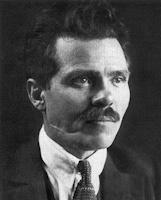
Read three example texts here:
Anti-Semitism and the Makhnovists by Malet
In February 1919 Makhno called together the leaders of the local Jewish colonies, and, on hearing that there had been a few robberies and beatings, urged them to organise their own self-defence, and gave them rifles and ammunition for this purpose. When there were murmurs at this-continued anti-Jewish feeling in evidence-he and the newly-formed cultural-educational section of the army held a large number of meetings on the subject.
Nestor Makhno: Anarchy’s Cossack by Alexandre Skirda
As an emigre Makhno had to summon up all his strength of will just to face the adversities and the slings and arrows of exile in strange lands and often hostile surroundings. France lived up to her reputation as a land of asylum, although he was informed at the Paris prefecture of police that it was on account of him that the Allied intervention in Russia had failed, but that this was not being held against him and that he was being granted a residence permit. In this light, it is all the more to his credit that he was able to engage in such intense memorialist and intellectual pursuits in the years 1925–1929, complementing on paper the fighting that he had led on the ground. Here let it be noted that his style, while not as “literary” as Voline might have wished, was quite vivid. In his writing he simultaneously described what was done and what he felt, and in some places this did not preclude a degree of pathos and undue prolixity; however, he always brings out the underlying and implicit meaning of his standpoints, sometimes with great lyricism. In his dealings with other libertarians, it was not his intention to capitalize upon his “prestige” and he was always 1ike a brother.
Peter Kropotkin

Read three example texts here:
Kropotkin was no crackpot by Stephen Jay Gould
Kropotkin begins by acknowledging that struggle plays a central role in the lives of organisms and also provides the chief impetus for their evolution. But Kropotkin holds that struggle must not be viewed as a unitary phenomenon. It must be divided into two fundamentally different forms with contrary evolutionary meanings. We must recognize, first of all, the struggle of organism against organism for limited resources – the theme that Malthus imparted to Darwin and that Huxley described as gladiatorial. This form of direct struggle does lead to competition for personal benefit.
Rudolf Rocker

Read three example texts here:
Goodreads review by Randall Wallace
Rocker defines capitalism as “a system for which man is nothing and dead possessions are everything.” Only with the awakening of revolutionary Syndicalism in France were the creative ideas of the First International rescued from oblivion.” For Rocker, the problem is “inoculating people from the ruinous delusion that salvation always comes from above” which impairs “the impulse to self-help”. During the Spanish Civil War, it was the Anarcho-Syndicalist labor unions which kept the fascists from taking over the country too fast. Meanwhile, when Hitler took power, six million organized workers did nothing to try and stop him. That shows you how the Federalism (Anarcho-Syndicalism is based on its principles) of the CMT worked where the “centralist machine which the Germans had built for themselves” couldn’t. “The general strike is an invaluable weapon, for which there is no substitute.” “Compulsory labor is the last road that can lead to Socialism.” “A general strike leads to a scattering of military forces.” “The whole import of sabotage is actually exhausted in the motto: for bad wages, bad work.” “The sabotage of the workers is always directed at the employers, not the consumers.” “Anarcho-Syndicalists know that wars are only waged in the interest of the ruling classes; they believe therefore, that any means is justifiable that can prevent the organized murder of peoples.” “In Italy, there has always existed, from the days of the First International, a strong Anarchist movement.”
Libcom comment by freemind
Nationalism and Culture is Rockers Magnum Opus and a fantastic work although I have doubts over his view that the Crusades were a purely ideological venture and religious principle was the primary if not solitary motive. His reasoning was meant to disprove Marx’s point that economy and profit are the main motivations for the ruling class offensive and action.
Voltairine de Cleyre

Read three example texts here:
Goodreads review by Lori
In Voltairine de Cleyre writings radical inquiry meets poetic eloquence in perfect unity. I know of no writer who manages to express dangerous, unpopular ideas so concisely and so evocatively as this author.
I would like to point out that one of the most relevant essay for any person alive today would probably be: “They Who Marry do Ill”. I am extremely skeptical that one can get people to critically view politics, and The Leviathan, but I think that they might be more open to scrutinize their feelings, and their most basic relationships.
Goodreads review by Gabriel Mitchell
Much of Voltairine De Cleyre’s work is bit too poetic for me but many of the essays such as “The Making of an Anarchist” have been very approachable.
I think this quote from that essay helps show how De Cleyre contrasts with other anarchist thinkers. This quote follows a discussion contrasting communist anarchism with individualistic anarchism:
“My personal conviction is that both forms of society, as well as many intermediations, would, in the absence of government, be tried in various localities, according to the instincts and material condition of the people, but that well founded objections may be offered to both. Liberty and experiment alone can determine the best forms of society. Therefore I no longer label myself otherwise than as “Anarchist” simply.”
Controversial for Their Actions
Bob Black
American individualist anarchist and essayist best known for “The Abolition of Work,” a polemic calling for the elimination of work as such; a frequent and combative figure in post-left anarchist debates, with a long history of public feuds and a widely circulated 1996 incident in which he informed on a fellow writer to police.
Read three example texts here:
In Defense of Bob Black by Aragorn!
Bob has never had an ally (or accomplice in the modern vernacular) as he made it structurally impossible for anybody to be (or become) one. There are many private examples of how this looked in practice but it’s an obvious point that if you are fighting for your interpretation of the singular right and correct position anyone who would join you has to convince you that they think the same way that you do and for the same reasons.
Bob’s life is a series of breaks from limited collaborations that is not disconnected from the Stirnerite postulation about organization only lasting as long as the participants in it gain satisfaction in that arrangement. Bob’s innovation, if it could be called that, was to (mostly) set fire to any possibility of future collaboration by way of personal insults and public declarations of acrimony. Let’s call this practice “angry egoism,” which can only be ameliorated by its target bending knee, thereby placing future collaboration on the unstable base of an explicit power-over relationship.
And these dysfunctions ultimately rise from the fact that every battle, every idea, and every break happened for Bob alone. He has had lovers and temporary friends but largely his life was one lived alone, with no voice cautioning consequences or suggesting a different pacing, no daily consultations in bed. The only voice in his head was his, amplified by a Debordesque diet of spirits.
The Elephant in the Room by narcissus
Yet, we must ask why many other reactionary texts remain on the Library’s catalogue for reasons we cannot guess. Take, for example [...] Bob Black’s “Feminism as Fascism,” which describes rape as something feminists “insist has been inflicted on them (or rather, as it usually turns out, on some other suppositious ‘sister’: the typical radical feminist has it pretty good)” — the implication being that feminists’ claims about rape are fabricated, the victims “suppositious.” [...] [A]nd it is our personal experience that, (as usual when anarchists reject this style of pseudo-radical top-down oppressive rhetoric, especially misogynistic, transphobic, and adult-supremacist rhetoric,) those who see it as a problem are sneeringly dismissed as moralists, hysterical prudes, and so on.[1] [...]
Bob Black’s Letter to Seattle Police by Sea Sharp Press
The following is a photocopy of the narcing letter that “citizen informant” attorney Bob Black (Robert C. Black, author of the aptly titled — given his “job” — “The Abolition of Work”) sent to the Seattle Police on February 21, 1996 informing on author Jim Hogshire. This letter was reproduced on page 17 of the Fall 1996 Loompanics Unlimited Supplement. (Loompanics was Jim Hogshire’s publisher, and also was, until this disgraceful incident, Black’s publisher; following this incident, they dropped Bob Black and pulped his books.)
Reddit comment by rechelon
blah blah if morality was objective everyone would arrive at the same conclusion with a little thought
This line of argument is always so flagrantly bullshit and lazy. It’s very easy to understand that there are laws of physics or structural relationship in math that can’t be determined with just a “little thought” but are nevertheless objective in the sense of reflecting deep structures in material reality. If anti-moralists actually read ethical philosophy rather than skimming some corners of it like Bob has, they’d realize many folks in many different traditions regularly make the argument that the amount of thought, reflection, study, etc, necessary to arrive at the objective conclusions they believe are accurate are too extensive for anyone to really have arrived at before. And indeed many argue that it’s quite plausible morality is objective but we would need infinite intelligence and time beyond what frail homo sapiens have to reach it conclusively.
Bob could scoff at the idea that there are objectively emergent value structures in minds the same way that there are objectively emergent models those minds make of the physical universe, but for him to reject claims on the premise that “if it was objective everyone could easily grasp it” is to entirely miss what objectivity means and also to banish huge sections of modern science and math as not objective merely because they’re non-trivial.
Hakim Bey
Full name: Peter Lamborn Wilson
American writer best known for coining the concept of the Temporary Autonomous Zone (T.A.Z.); also documented, including by anarchist critics cited below, as having defended adult-child sexual contact in his writing and reportedly preyed on children.
Read three example texts here:
The Left Overs: How Fascists Court the Post-Left by Alexander Reid Ross
[...] an occultist named Hakim Bey developed the idea of the “Temporary Autonomous Zone” (TAZ). For Bey, a TAZ would actualize a liberated and erotic space of orgiastic, revolutionary poesis. Yet within his 1991 text, Temporary Autonomous Zone, Bey included extensive praise for D’Annunzio’s proto-fascist occupation of Fiume, revealing the disturbing historical trends of attempts to transcend right and left. …
Thus, the post-left began to assemble through the writings of ultra-leftists, green anarchists, spiritualists, and egoists published in zines, books, and journals like Anarchy: Journal of Desire Armed and Fifth Estate. Although these thinkers and publications differ in many ways, key tenets of the post-left included an eschatological anticipation of the collapse of civilization accompanied by a synthesis of individualism and collectivism that rejected left, right, and center in favor of a deep connection with the earth and more organic, tribal communities as opposed to humanism, the Enlightenment tradition, and democracy. That post-left texts included copious references to Stirner, Nietzsche, Jünger, Heidegger, Artaud, and Bataille suggests that they form a syncretic intellectual tendency that unites left and right, individualism and “conservative revolution.” As we will see, this situation has provided ample space for the fascist creep. …
An important aspect of the Anti-Politics Board was the articulation of nihilist and insurrectionary theories, both of which gained popularity after the 2008 financial crisis. In an article titled, “The New Nihilism,” Peter Lamborn Wilson (aka Hakim Bey) pointed out that the rising wave of nihilism that emerged during the late 2000s and into the second decade could not immediately be distinguished from the far right, due to myriad cross-over points. Indeed, Stormfront is riddled with users like “TAZriot” and “whitepunx” who promote the basic, individualist tenets of post-leftism from the original, racist position of Stirnerism. Rejecting “political correctness” and “white guilt,” these post-left racists desire separate, radical spaces and autonomous zones for whites.
Twitter post by Spencer Beswick
In May-July 1989, Anarchy: A Journal of Desire Armed published a ‘Special issue on children’s sexuality’ beginning with ‘Pedophilia: Views from the other side.’ This sparked years of articles and letters defending sex with children (read: rape) from editors and regular contributors.
This reflects a wing of the anarchist movement that has long defended the ‘freedom’ of people (usually men) to assault children using anarchist language.
I’ve been thinking about this since Hakim Bey/Peter Lamborn Wilson died a few months ago. As an expose of him put it years ago, Bey “uses anarchism in an ethically warped, opportunistic way by pretending that adult-child sex is a natural freedom.” (libcom.org)
When Bey died, I was doing research at the University of Michigan’s Labadie Collection. I read through numerous issues of Anarchy: A Journal of Desire Armed from the 1980s-90s and was shocked to see how central and prevalent the defense of sex with children (rape) was. One anarchist who lived in NYC in the 90s told me that it was an open secret that Hakim Bey preyed on young boys, and that parents warned each other to watch out for him. This is usually left out of his history, and of the history of anarchism in general.
Needless to say, this is a shameful aspect of the anarchist movement which should be ruthlessly exposed, criticized, and rejected. It calls into question the entire political and ethical approach of this wing of the anarchist movement. I refuse to defend or associate with it.
Paedophilia and American anarchism by Robert P. Helms
In this writer’s opinion, the pedophile writings of Hakim Bey indicate a general deceit in his philosophy, and are evidence that his concept of the Temporary Autonomous Zone is inspired by opportunism, not by good will. He presents arguments for human freedom while actually wishing to create situations where he is free to put his deranged sexuality into practice. This is an abuse of anarchism, and new readers of Hakim Bey should take the pedophilia into consideration before being led “down the garden path.” Once the awkwardness has been overcome and we look at pedophilia as an item for discussion, we will make very short work of it. All attempts to justify the practice are morally idiotic, and the TAZ is no more than a “Neverland” on the anarchist landscape.
Leaving Out the Ugly Part — On Hakim Bey by Robert P. Helms
Bey’s best-known book Temporary Autonomous Zone (TAZ) describes spiritual zones in which anything goes, where the oppressive rules of the outside society need not interfere with what feels good to do. I realise that many honest people have read TAZ without taking any sleazy impression from it. I hope they’ll forgive me for pointing out that paedophiles say these same things to children. In his essay “Obsessive Love” (Moorish Science Monitor, Vol. 7, #5, Summer 1995), in which he pretends to be quite the classical scholar, he talks about ancient religious views on romantic and obsessive love. “The Greco-Egypto-Islamic ferment adds a pederastic [i.e. paedophile] element... the ideal woman of romance is neither wife nor concubine but someone in the forbidden category...” He uses the term “spiritual alchemy” for witnessing the “Devine Beloved in certain beautiful boys,” and remarks that, “since all homosexuality is forbidden in Islamic law, a boy-loving sufi has no ‘safe’ category for sensual realisation.”
Informal Anarchist Federation
Loose-knit insurrectionist tendency (FAI, also FAI/IRF when linked with the International Revolutionary Front) emerging in Italy and Mexico in the late 2000s, carrying out bombings and shootings against nuclear, state, and corporate targets; noted for its decentralized “informal” structure of autonomous affinity-group cells acting without central coordination.
Read three example texts here:
The Anarchist Federation statement on the kneecapping of a nuclear executive perpetrated by the Informal Anarchist Federation by Anarchist Federation
On the 11th of May Roberto Adinolfi, CEO of an Italian state controlled nuclear engineering company, was shot and wounded. A cell of the insurrectionist Informal Anarchist Federation have claimed responsibility for the attack in a statement, saying that it was an act of vengeance for deaths and environmental damage caused by the nuclear industry. Previous acts claimed by Informal Anarchist Federation cells include sending a letter bomb to the Italian tax collection office, almost blinding a worker at the office* and risking the lives of the postal and clerical workers who unwittingly carried the bomb. …
In our aims and principles, the Anarchist Federation states that “It is not possible to abolish Capitalism without a revolution, which will arise out of class conflict. The ruling class must be completely overthrown to achieve anarchist communism. Because the ruling class will not relinquish power without their use of armed force, this revolution will be a time of violence as well as liberation”. We are not a pacifist organisation and do not condemn insurrection itself or all insurrectionist tactics; however, as Anarchist Communists we strongly criticise individualist and vanguardist tactics that do not come out of a broad-based class struggle movement. We condemn actions that put workers in danger without their knowledge and consent, and we reject elitist statements, such as that made by the Informals, which consider the working class to be too ignorant and invested in Capitalism to be relevant to struggle.
Capitalism is, fundamentally, a social relationship; it can no more be harmed by small groups who are disconnected from the wider class struggle shooting individual bosses or sending bombs through the post than it can by passively marching from one place to another or consuming “ethical” commodities. Instead, the Anarchist Federation advocates organising with other working class people to take direct action for ourselves in order to both defend ourselves against attacks by capital and the state in our everyday lives and build a culture of resistance that can seriously challenge capitalism. As well as being tactically more effective than isolated acts of violence, organising in this way allows us a glimpse of a better world, free of exploitation, alienation and oppression. By acting collectively and making ourselves accountable to others, we prepare ourselves for a world where our whole lives are really under our own control.
Say You Want an Insurrection by CrimethInc
If we have never called ourselves insurrectionists, it is not because we do not wish for insurrection, but because our own temperament predisposes us to an anarchism without adjectives. The important thing is to fight for freedom and against hierarchy; we imagine that this will demand different approaches in different situations, and that these approaches may need one another to succeed. We are anarcho-syndicalists on the shop floor, green anarchists in the woods, social anarchists in our communities, individualists when you catch us alone, anarcho-communists when there’s something to share, insurrectionists when we strike a blow.
Anarchism without adjectives not only refuses to prioritize one approach over the others, but emphasizes the importance of each aspect of anarchism to its supposed opposites. The riot needs the bake sale to be repeatable; the arson needs the public campaign to be intelligible; the supermarket heist needs the neighborhood grocery distribution to pass on the goods.
All dichotomies are false dichotomies to some extent, masking not only the common threads between the terms but also the other dichotomies one might experiment with instead. On close inspection, successful insurrectionism seems to depend so much on “community building” and even “lifestyle anarchism” as to be virtually indistinguishable in practice. If we retired this particular distinction, what other distinctions might arise in its place? What other questions might we ask?
All this is not to say that individual anarchists can’t focus on their particular skills and preferred strategies—simply that it is an error to frame anyone’s personal preferences as universals. In the end, as always, it comes down to a question of which problems you want to wrestle with, which shortcomings you feel most equipped to overcome. Do you prefer to struggle against invisible hierarchies in informal networks, or brave the stultifying inertia of formal organizations? Would you rather risk acting rashly, or not acting at all? Which is more important to you, security or visibility—and which do you think will keep you safer in the long run?
We can’t tell anyone which problems to choose. We can only do our best to outline them. Best of luck in your insurrections—may they intersect with ours.
Theo Slade
Left-anarchist whose first edited book turned a set of prison letters between two childhood best friends into an unfinished autobiography of the imprisoned woman — a figure with feminist resonance, given her horrific childhood. This interest in how difficult upbringings shape some political terrorists and criminals led him next to write critical essays on Ted Kaczynski, drawing angry pushback from Kaczynski’s admirers. Theo argues that anti-civ and primitivist currents have a legitimate place in the anarchist big tent — just not Kaczynski’s particular anti-tech vanguardism. He’s also known for dumpster-diving the Anarchist Library’s deleted texts bin and quoting from the Anarchist Library’s public Matrix chat to show librarians’ reasons for deleting and rejecting various texts.
Read three example texts here:
-
A Conversation with John Zerzan on Direct Action, School Shootings, Authenticity, Veganism & More
-
The Communications of Ted Kaczynski as part of his Terror Bombing Campaign
Twitter post by M. Victoria Navajas Claros
I made it onto a “not anarchist enough to be in an anarchist library” list with enough notable titles that the only thing I can assume is that the librarian is either working out of a cubicle in DC or has some sort of CIA-distributed propaganda bible on “what anarchist is.”

Source: Some of The Anarchist Library’s Controversially Deleted & Controversially Not Deleted Texts
The Anarchist Library: Hi — the text wasn’t published because it is an unknown author, ... Furthermore, the website and image you link is a “leak” from someone who shouldn’t have shared
Theo Slade: Nothing in the image is a leak, it’s information you publicly link to in at least two places on your website:
-
https://bookshelf.theanarchistlibrary.org/library/the-anarchist-library-on-torrent
-
https://bookshelf.theanarchistlibrary.org/library/librarian-mirrors-of-library-en
“Not anarchist” is the reason a librarian gave as the deleted reason at the time, anyone can verify using your links.
M. Victoria Navajas Claros: Thank you for digging that up....
The Unabomber fan club: How killer Ted Kaczynski became an icon for new generation of radicals by Kieron Monks
Theo Slade, a contributor to the Ted K archive – a collection of writing by and about the Unabomber – believes that many alienated young men identify with a “kindred broken spirit”.
Kaczynski, a highly intelligent but awkward character, possibly on the autism spectrum, embraced isolation by withdrawing from society to live in the woods of Montana.
“I think his eccentricities and his weirdness are compelling to people who are struggling,” says Mr Slade. He often talks to Men’s Rights Activists (MRAs) through the archive who seem troubled and alienated.
The Unabomber offers a vision of freedom, Mr Slade suggests. In one case a member of the community followed his icon’s lead by going to live in a hut in a national park.
In other cases, Kaczynski’s influence was not harmless. Greek ex-soldier Nikolaos Karvounakis is now serving a prison sentence for planting a bomb in Edinburgh after being radicalised in Unabomber forums.
Kaczynski cultivated a following in prison with an eye on his legacy and maintaining the anti-technology cause, exchanging letters with many admirers. But his fans were often a disappointment, and he continued to disparage leftists and eco-fascists in his writing.
A Conversation with John Zerzan on Direct Action, School Shootings, Authenticity, Veganism & More by Theo Slade
What is happening in terms of social movements? Perhaps Kaczynski’s forgotten. And to me his rigidly anti-tech focus kind of loses its steam. As you know, I’m anti-civilization and if you’re just stuck with only the anti-tech thing you get to this wooden position where you lose a lot of potential it seems because the rest of it just flows.
I noticed in the notes you were saying well you don’t want to be stuck in some medieval deal without industry, well that’s right, there you get the problem, right? I mean there was a piece – not to go too far along with this, but there was a piece – in the American magazine ‘The New Yorker’ back in the 90s when the trial was still going on I believe, it was simply called ‘E Pluribus Unabomber’, it was kind of a funny little one page piece. And it posed that question precisely, precisely that, okay so you’re against modern technology? Does that mean you want the middle ages? And he never answered that question.
Matt Walsh Hates Indigenous People by Atun-Shei Films
It’s interesting, he’s kind of making this comparison between the sort of Rousseauian view of the Noble Savage, that basically humanity is inherently good and that society kind of corrupts him. But basically he’s arguing that the opposite is true, this kind of Hobbesian from what I understand...
Again, I’m just kind of skimming here. I’ll sit down and read the whole book later, which, again, seems very interesting and it’s free on The Ted K Archive. Thanks, Theo, for uploading this, if this was you.
Discord comment by Anonymous
It’s up 🙂
There are still some machine errors that need fixing from converting from photoscan to text, but all the footnotes work, and all the italics are marked, etc.
Thank you! The archive is the first site to host a copy available to the public! I am proud to have been the scanner.
ziq
Longtime administrator of raddle.me. Known for calling anyone who wants to keep industrial technology, things like bread ovens, trains, or cities, a fake anarchist. After apologizing for toxic, sectarian trolling that included the use of alt accounts, they briefly stepped down as admin.
Read three example texts here:
Reddit comment by Anarchierkegaard
“Frameworks not rules!”
Ziq with his usual habit of missing the point of what both historical and contemporary anarchists mean via titbits of perspectives and misrepresentations of ideas. Another fine example of “[those] gentlemen [who] think that when they have changed the names of things they have changed the things themselves.”
While I’m sure the pop-psychology is all very interesting for his blog, I’m not very impressed that he neither addressed the kind of order that Proudhon or Reclus referred to as naturally emergent nor the idea of responsibility in the maintenance of a particular ethic (in the vein of Day or Levinas). Instead, he runs roughshod over something interesting and then reasserts the object of critique with a dose of Romanticism.
Reddit comment by ArchAnon123
I’m not quite sure what to think about them; on the one hand, they make excellent points about how rights are inextricably linked to government power, the inherent flaws in democracy, and why “left unity” tends to work in the favor of tankies.
On the other hand (and bear in mind here that I view myself as an anarchist without adjectives), the sheer virulence of their antagonism towards anyone who doesn’t match their specific form of individualist anarcho-primitivism is disturbing to say the least. It gives me the impression that they see other anarchists who don’t share their specific views as being badly deluded at best and secret authoritarians at worst; while I admittedly don’t see eye to eye with all of the anarcho-primitivist views, I can hardly imagine going so far as to openly demonize them as ziq has. At the end of the day, we’re all working in some way towards the downfall of the state in the hope that something better can replace it and we can’t accomplish that if we’re too busy trying to decide whose form of anarchism is “right”.
Reddit comment by ziggurter
I will point out that “Ziq” (AKA “eeplox”, AKA “nowaydaddioh”, AKA about a hundred other account names) was an “anarchist” on Reddit who was absolutely rabidly reactionary against actual anarchists, festered the authoritarian r/metanarchism clique (who are probably still there) for years, harassed anarchist subs endlessly when people gathered in them after he and his violent mob kicked them out of r/Anarchism, and lied to and conned users to get them to use his shitty doxxing site once he built it off of Reddit. There is very much an “aesthetics without the philosophy” crowd, unfortunately, and they are unfortunately pretty prevalent online. Calling Ziq an “anarchist” is one of the most laughable claims you can make about the philosophy. Might as well apply the label to “ancaps” first, TBH.
Reddit comment by iadnm
So I decided to read this because it’s been a few years since I have and I thought I should give it a fair shake again and wow, it fucking sucks.
I am quite frankly baffled by the conclusions reached in this text, and it comes across as intentionally misrepresenting what a community can even be while also ignoring all the problems Ziq has with “community” will not only exist within “friendships” but can be even worse. It seems to assume that individuals have an entirely unbiased view of others outside of some nebulous “community” that gives them enough clarity to reject abusers, something that isn’t actually the case in real life. Abusers make friends and the friends are the ones who usually protect them.
It’s also frankly, really scary to focus organizing solely around people you like. That could lead to even more horrific abuse just because someone is “different.” It runs into the same problem I have whenever someone talks about how some person who did something bad was “never an anarchist.” If you believe that your friends or “real anarchists” are those who will never do something bad, then you’re far more likely to ignore or justify any abuse they do. You will not be objective, because no one is.
So yeah, I don’t like this article, I think it does not offer a real solution to the problem of abuse, nor does it seem to understand how the problem can be made all the worse under its supposed solutions.
Reddit comment by iadnm
My issue with it, is the issue that I have with most of Ziq’s work and comments. In that it’s a dogmatic text that posits Ziq’s own way of thinking as the only correct path, and that anyone who disagrees is in fact not an anarchist and deserves to be dismissed and insulted.
It inherently assumes that anarchist communism will in fact not be anarchist and will instead be an authoritarian institution that oppresses people. Of course this text is not attempting to engage in a dialogue on the merits and downfalls of anarchist communism, but rather to prop up Ziq as inherently right.
This assessment, while tied to the text itself, is also based on my own interactions with and obvervations of, Ziq. Such as when I once removed a combative post they made on this very sub, and they accused me of silencing anti-civ voices on the subreddit, despite an earlier post existing where none of the anti-civ responces were removed. Additionally whenever something they post is downvoted, they complain in the comments about “actual anarchist” posts or texts being silenced and dismissed.
All in all, this text is more a reinforcement of my perception of Ziq as highly dogmatic and unwilling to properly engage in a conversation with opposing view points.
Reddit comment by MaxwellThePrawn
Another garden of eden anarchist. “People would rely on themselves and the tremendous bounty that nature provides”. This idea that we were born into heaven, have sinned gravely and been thrown out, and need to repent to be allowed to return, is absurd and dangerous. We have been modifying our natural environment since we have inhabited it. Are we supposed to get rid of apple trees because they are the product of thousands of years of human intervention? Dogs? Are there any penicillin trees that our sick can rely on, on the island of Eden the writer apparently inhabits?
This argument is so shallow and so tiresome. I have no interest in praying to the gods for mana.
Indigenous Anarchic Hierarchy by Eepa
Anarchy & Anarchism take their name from the Greek root anarchos, broken down to its roots- an meaning without and archos meaning ruler. Without-ruler has differing interpretations, the most rigid being the absolute destruction of hierarchy. This has led many Indigenous communities to steer clear of defining themselves under the rigid definition used by some to be anarchism, an ideological dogma that pushes aside material and spiritual realities of our peoples. Rigid and often European centered interpretations of anarchy/anarchism do have variations within them: herein we will briefly explore
For the absolutist position on hierarchy, we can look to a contemporary writing in Anarchy Vs. Archy: No Justified Authority Or Why Chomsky Is Wrong by Ziq. The author expresses the position that anarchy is not defined as the absence of rulers, but specifically states that “Hierarchies exist for rulers to maintain their social control & power over the population. This control is maintained with violent force by authorities appointed by the rulers: the army, national guard, police, courts, prisons, social workers, the media, tax collectors, etc.” While Ziq makes allowances for services and advisement by specialists, they fail to acknowledge the deference between respect based hierarchies (such as the deference to specialists) and the coercive hierarchies with their machinations to maintain coercive power.
Raddle comment by totalism
Burn the Bread Book by ziq
I think this is great actually. Bread Alienates Us From XYZ is actually a really good argument to persuade people to stop caring about being alienated from whatever.
Anyway, I don’t really disagree with the whole people feeding themselves bit but the way that it is phrased does make it sound like a parody of Milton Friedman because it implies that like, no one ever collaborates on food production which I don’t think is what ziq is implying, actually.
If anything this is a thoroughly Marxist (neutral affect) text phrased like it was written by a libertarian (neutral affect) taken to primitivist conclusions (kind of not surprising affect). We can’t have complex food production without markets, which are alienating and exploitative and distance us from nature, ergo people feed themselves. Feel free to accuse me of reading into this too much.
Raddle comment by 365degrees
Edit: ziq and I had a chat and I don’t want to support them further. This is a redo of this comment without the bullshit.
We go way back. /r/LeftWithSharpEdge was the coolest place to be when we met, and it was a great place to participate in. People there were very nice, but you still had an urge to poke at me for being the “resident anarcho-transhumanist”. I didn’t care then, as I had a lot of better friends who respected that.
I’m now convinced you manufactured much of the active population there, as you have here. That’s not a big deal, until you use that population to pick on my friends (such as ShiningWing and GNU_PONUT) and pretend you can’t do anything about it.
I will not be accepting your apology, as you didn’t make any attempt to seek help or admit any wrongdoings when it was a problem. You then decided to trick everyone else into making your victims the antagonists of all this.
Reddit comment by meanderingdecline
The author is trying hard to pick a fight where one doesn’t exist. [...]
Post-civ anarchism arose because in the early 00s primitivism/green anarchism was very focused on the primitive and inflexible in formulating actions for the immediate future of collapsing civ.
The author needs to be thanking Killjoy for the critique that allowed the author to formulate their concept of primitivism.
Instead they pointlessly make untrue ad hominem digs at Killjoy-
while post-civ is nothing more than 2 short blog posts filled with strawman attacks seemingly informed by silly “return to monke” memes made by leftists on Reddit and Twitter.
The publication dates of the post civ texts were in the 2008–2011 period. The “return to monke” meme primitivism began in 2018.
Is Killjoy under the impression life in whatever dreary USA suburb she inhabits is unique from her parents dreary suburban existence?
Margaret Killjoy lives in an off grid cabin with no electricity on a commune in rural North Carolina. [...]
Post-civ acts as a course of action to the on going collapse of modern civilization that helps establish a foundation for an an-prim future in the wreckage of civilization’s collapse.
As far as difference post civ accepts the usage of certain non primitive technologies (smithing, working with salvaged materials) or actions (permaculture/agriculture) in surviving the in/after the collapse of civilization. Post civ looks to primitive survival skills as well as “1970s appropriate technology”, “3rd World subsistence tech”, “redneck ingenuity” and more. There’s a good post-civ slogan about usage of technologies and the detritus of civilization: “take what you need and compost the rest”.
As far as the scale of Post Civ it’s a sub niche of a sub niche of a fringe political ideology. The Anarchist Library has probably almost all the post-civ publications written. There aren’t many.
As far as real world implementation of postciv the “lifestyle anarchist” squatter crusty milieu in the US in the early 00s was living as if civilization already collapsed. Back then I stayed in squats that had rainwater collection for drinking water, bicycle powered blenders with people flintknapping arrowheads out of salvaged glass.
Controversial for Their Associations
Alexander Reid Ross
American antifascist researcher and academic, co-founder of the Earth First! Newswire and author of Against the Fascist Creep, known for tracing red-brown convergence and fascist entryism into anarchist and radical-left spaces; his later paid work alongside former CIA/DHS officials for an “anti-extremism” consultancy has itself drawn sharp criticism from the anarchist milieu he studies.
Read three example texts here:
Anarchy and Democracy by Center for a Stateless Society
It marks a nice contrast from Wayne Price’s relatively “aw shucks” disinterest in philosophical critiques of democracy that Alexander Reid Ross brings history and philosophical language to the defense of democracy. Unfortunately, I have a violent allergic reaction to the flavor of philosophical language he adopts.
On the upside, I appreciate that Alexander has injected a certain amount of historical reference to this discussion by mapping some of the ways “democracy” has morphed in its associations over history and in different contexts or discourses. Of course, whether one agrees with the narrative arc Alexander maps with those details is a different story; he certainly excludes the long history of anarchist critiques of democracy, arguably underhandedly painting Malatesta into the ‘pro’ camp and acting like Bookchin didn’t come to realize his politics had always been irreconcilable with the ideal of anarchism. There is, in short, plenty of room for disagreement here, but I find citations of authors largely a distraction. It should matter not if literally every prior anarchist in history was pro-democracy if what is best meant by democracy is discovered to be irreconcilable with what is best meant by anarchism itself. If every heretofore anarchist was patriarchal or nationalistic that should not prove that anarchism is not in fundamental tension with those values.
Where Alexander’s essay is the strongest is pointing out that notions of liberty and equality got tied up with democracy in some wings of the enlightenment, and thus anarchy and democracy have grown intertwined in some respects. But of course it is frequently the case that irreconcilable concepts become intertwined in complex ways through the vagaries of history. And the popular political prescriptions that were attached to the Enlightenment are a place where I feel its critics actually have some kick.
Where I think Alexander most distinguishes himself in the anarchist debate over democracy is his bipartite analysis, separating democracy as a principle from democracy as an institutional practice:
“If it is democracy on the level of principle that motivates people to revolution, it seems as though democracy on the institutional level that causes their ruination.”
Envisioning a Post-Western World by Rob los Ricos and Paul Cudenec
AntiNote: In light of recent discussions among antifascists (including here within the Antidote Writers Collective) about an esoteric but significant kind of red-brown convergence—the potential for fascist counter-recruiting on the more nihilistic, misanthropic fringes of deep green, Euro-pagan, and Malthusian eco-anarchist groups—we recognize that some of the arguments put forward in the article that follows are right on the knife’s edge.
We present them nonetheless for two reasons: firstly, of course, these ideas are out there whether we like it or not and warrant critical attention; and second, if spaces—both physical and ideological—are vulnerable to fascist counter-recruiting, this implies an overlap where antifascist counter-recruiting could (and should) be happening as well. In other words (indeed the words of Magpie Killjoy elsewhere in these pages), it behooves people in contested cultural terrain to, well, contest it.
Open letter from Return Fire magazine to the International Anti-Prison / Anti-Repression Gathering
Our circles have benefited from various forms of using security culture to defend ourselves from policing and journalists; we need to go further and consider how to prevent being compromised by academics (or the communications technologies which we increasingly rely on and which the latter, like the cops, can easily access and analyse). We have to popularise this broad suspicion as far as possible in the movements we participate in (even when there are now an increasing amount of anarchist academics whose studies could benefit us but too often only end up in the hands of their supervisors, the State, and a tiny handful of other scholars). The scandal of recent years of the anti-fascist researcher Alexander Reid Ross, co-founder of the Earth First! Newswire and contributor to an anarchist academic journal, going on to work with former CIA and Department of Homeland Security agents for an ‘anti-extremism’ centre providing intelligence and analysis to technology companies, law enforcement and public officials (and which also produced a report on how anarchists use social media to “instigate widespread violence”, comparing them to jihadis and right-wing militias) should bring this awareness to the fore.
Noam Chomsky
American linguist and prominent self-described anarcho-syndicalist/libertarian socialist whose political writing on US foreign policy and media has reached a wide audience well beyond anarchist circles; his decades-long association with Jeffrey Epstein has drawn renewed scrutiny.
Read three example texts here:
There Are Two Noam Chomskys. The One You Love, and the One That Was Friends With Jeffrey Epstein by Chris Knight
Chomsky was accustomed to finding positives in people whom he would have shunned as criminals had he not encountered them via his professional life at MIT. [...] My long-term project to decode Chomsky came from a realisation that his deeply reactionary linguistic theories lay behind nearly everything that was wrong with the paths taken by anthropology, linguistics and the human sciences since the 1970s. I am referring here to the so-called “cognitive revolution” in these various branches of science.
The essence of this “revolution” can be summed up as philosophical idealism, a decisive reversal of the insights of Karl Marx. This idealism leads to a prioritising of mind over matter, internal computation over public action.
Samuel Edward Konkin III
Canadian-American libertarian theorist who coined “agorism,” a strategy combining anarcho-capitalist economics with counter-economic black/grey market activity and, distinctively, an openness to tactical alliance with the left.
Read three example texts here:
Twitter post by rechelon
Konkin was basically an ancap that was like “the left is cool and Mao was right about dual power, let’s ally with them and use that tactic” and so his ideology was responsible for the few instances of ancaps doing shit in the actual real world / building actual things.
But it was still ultimately pretty marginal.
There are good agorists in left market anarchist circles, but the totality of “agorism” never really amounted to more than a couple thousand people. It’s always been a minority inclination.
Weaving the Dark Web by Robert Gehl
Samuel Konkin’s agorist philosophy, developed in the post-countercultural context of the United States in the 1970s, inspired by economists such as Ludwig von Mises, Murray Rothbard, and Robert LeFevre, and disseminated through Konkin’s edited publications New Libertarian Notes, New Libertarian Weekly, and New Libertarian until 1990, offered a seductively simple answer to the burning question of libertarianism: What is to be done about the state? Konkin’s answer: make markets that are outside state control. But this seductively simple approach has remained largely marginal in larger debates about economy and society. Part of this can be attributed to Konkin’s call for “revisionist history,” which he felt would help uncover previously hidden agorist practices. Unfortunately, this call associated Konkin with Nazi Holocaust deniers (i.e., revisionist historians who dispute the extent of Nazi death camps). But beyond this troubling association, Konkin’s agorism is also likely marginal because he refused, out of principle, to speak at or hold positions in state-based institutions such as universities. Rather than publishing his work in mainstream economic journals and teaching students at university, Konkin held forth in the living rooms of agorist communal homes and published his work on the Internet.
Nonetheless, while Konkin’s and agorism’s effect on mainstream economics has been minimal, they have had a presence on the Dark Web, including major influence on the most famous Dark Web site of all, the Silk Road drug market.
Anarchism: Left, Right and Green by Ulrike Heider
Konkin III has another secret love besides the New Left, and in his opinion both of these loves are not at all dissimilar. He says that the most principled activists and enemies of the power elite are to be found on the extreme left and the extreme right, only the terms are different, while political moderates are opportunists. Which alternative to the existing system is actually envisioned by those hostile towards the power elite does not appear to count, an attitude that in the past has often enough led leftists into suicidal coalitions.
For Konkin III the present system of economic control in the U.S is “democratic fascism.” In Europe, he says, it was the social democrats who first came out in favor of governmental economic control; in the US it was the Progressives, from whom the Nazis learned a great deal.
Certainly during the war time it was very difficult to tell the difference between National Socialists and New Deal America. They both had tremendous control over the economy. People were in concentration camps on both sides.376
We New Libertarian Magazine published an article by the moderate revisionist historian Jeff Hummel on political repression within the US before and during World War II. His research on government measures against communists, Jehovah’s witnesses, black Muslims, Japanese, and fascists shows that there can be no good war, a view to which one could hardly object, if only the author did not at the same time play down the dangers of American and German-American Nazis, almost to the point of sympathizing with them. People such as Sylvester Viereck, the extremely influential pro-German isolationist publicist, or Fritz Kuhn, the leader of the powerful American Nazi organization “German- American Bund,” or Ezra Pound, the poet and propagandist of the Italian fascists—in Hummel’s view they are but helpless victims of government repression, never allies of fascist (state) criminals. The same issue of the New Libertarian Magazine contains a critique by Robert Paurisson of his moderate colleague David Irving. Konkin III, the journal’s editor, comments:
The “cutting edge” of Revisionist History is that of World War II atrocity stories. For our time, defending the free speech of the Holocaust Revisionists ... is the difference between defending free speech and just mouthing off. Robert Faurisson ... is a rare treat to defend: a determined, committed scholar, willing to be a martyr for his cause ... willing to challenge his fellow Revisionists, especially for being insufficiently hard-core (our kind of guy!).231
Faurisson’s article was originally written for the Journal of the Institute for Historical Review (IHR), which declined to print it. Konkin III was listed as a member of the advisory board in an institute leaflet dated 1985, along with Robert Faurisson, W.A. Carto, the right-wing founder of the institute, Wilhelm Stäglich, the German Nazi judge, and other German and German-American Nazi sympathizers. The New Libertarian contains a large ad for the IHR, which is located in Costa Mesa, California, the global capital of revisionist history.
I called the IHR and requested informational material, my German accent reaping the friendliest of tones at the other end. The surprise packet from the IHR arrived two days later, discretely posted in an unmarked envelope. The first item to grab my attention was a photograph of Goring’s biographer David Irving posing in front of an enlarged picture of his hero. I began reading the material and learned that the IHR is a nonideological and nonpartisan institution dedicated to the prevention of war and to the discovery of the truth. Yet the language used bespoke quite a different story: the mass murder of six million Jews was referred to as the “so-called holocaust” and a “Zionist myth”; accounts thereof were belittled as “the holocaust story” and eyewitnesses as “the holocaust lobby”; and the existence of concentration camps questioned by referring to them as “so-called extermination camps.” The IHR’s book catalog features all the classics of Holocaust revisionism and includes numerous accounts of the trials and tribulations of revisionist authors and professors in courts of law. The list also contains a large selection of publications about Russian and Allied atrocities against the Germans during and after World War II, sometimes referred to in this literature as the “holocaust on the Germans.” It appears that the bestsellers are militaristic and nostalgic Nazi trash novels set in the 1940s. A few works of serious scholars such as Victor Marchetti, Edward Said, Christopher Hitchens, as well as Chomsky’s The Fateful Triangle, are included. Cynically the IHR seems to attempt to equate their positions with its own in order to create confusion.
Controversial for Their Ideological Excesses
Anonymous
The Anarchist Library’s most prolific and least accountable contributor, publishing everything from fire-starting advocacy to spiritual anarchy theses to jazz band manifestos under a single sprawling, deniable byline; equal parts ghostwriter, coward, and folk hero depending who you ask, and the closest thing the library has to a house style all its own.
Read three example texts here:
Raddle comment by Esperaux
I’m not too sure how much the Anonymous claims on its own can be true though there definitely is a cult of Ocalan, little to no genuine anticapitalist projects to speak of, and a flimsy celibacy policy. The disbanding of the IRPGF also seems to be very suspicious and telling. Rojava is not anarchist to say the least.
Reddit comment by WildVirtue
I knew a lot of this already, but I’m always glad to read evidence of wrongdoing to get a fuller picture on the region. I’m particularly interested in the exporting of the process of ‘Tekmil’ back into anarchist spaces in the UK: [...]
Here’s one piece of counter evidence about the potential increase in women’s autonomy anyways:
Mexie: How are feminist ideals incorporated into their praxis because I know there’s a strong focus on feminism when anyone talks about Rojava or the Kurds?
Josh: Yes so there’s obviously the Yekîneyên Parastina Jin which is the YPJ, the women’s protection units, so that’s a big part of it, they set up a lot of women’s houses which are, it’s hard to describe, I’ve been to a couple for a short amount of time, but they’re essentially some sort of mix between family planning advice Center, domestic violence shelter and a barracks, in some cases.
Because it’s a very violently patriarchal society in many ways and so you kind of have this sort of thing where a woman will escape a forced marriage or a violent home and come to the woman’s house and the father, the brothers, the husband and his father and brothers and everything will come along to try and get them back and when a woman with a machine gun pops up on the roof, they generally reconsider.
In that sense they’re taking a very direct woman controlled approach to facing these things head-on, it’s one thing that they don’t compromise with, on economics that’s one thing, but they do not compromise on the women’s rights, and that sometimes bring them into opposition with the more you know conservative and patriarchal elements of society, but the kind of benefits are there that generally all you gas out of it is just you know the old husband’s complaining that they can’t tell their wives or daughters anything anymore.
Yeah so there’s that and in the actual councils there’s a 40% gender quota so essentially if there’s you know 60% women on a council on the larger councils there aren’t allowed to be any more there’s forty percent men as the rest the council and likewise if there’s sixty percent men then there has to be 40% women and this they will do things like you know they will delay the council meeting until all these men who have come and said oh well my wife couldn’t come because she’s busy they tell the man to go home do whatever work the woman was supposed to be doing and sent the woman to the council otherwise they won’t help them sort of thing so yeah it’s very important part of the practice and is the thing that they’re most successful at. [...]
There’s also things like one of my best came out in fact most of my best commanders well those out there were women very varying different levels so this is another thing at all levels of the hierarchy sort of thing there are a man and a woman with a kind of equal position but the woman can give orders to men so you know low like my equivalent of a captain I suppose could order around the you know platoons of male soldiers in the YPG but a man cannot do the same to the woman they can suggest to the YPJ that they should do something and you know often there in the interests of fighting the same war or whatever so they’ll do it but they can’t command them they can’t order them. If a male YPG member commits a offense against a YPJ it’s the YPJ and their command structure that deal with it and there’s nothing we can do about it so say this is very unlike to happen but you know men being men say a man was sexually assault a member of the YPJ then the YPJ could come along with their rifles and everything drag him off and punish him in whatever the way they saw fit and we won’t be allowed to raise a finger or protest you know it’s deal with not for us. [...]
People often joke that if you assault a YPJ they could just drag you off and shoot you, and that’s not quite true but they’re a lot more likely to say platform a man where essentially they have to stand in front of like all the YPJ in the region while each one lays out exactly why what they did was wrong at great length and like kind of shame of them in front of everyone that’s quite a common punishment for sort of intermediate kind of crimes or offenses or whatever crimes isn’t quite the right word for some things that you would get that kind of treatment for, but yeah.
Alfredo Bonanno
Italian insurrectionist anarchist whose The Anarchist Tension and Armed Joy remain foundational for insurrectionist and nihilist-adjacent currents, translated and circulated widely through outlets like Elephant Editions.
Read three example texts here:
Goodreads Review by Siddiq Khan
There are a few obviously stupid excesses which explain why its publication got the author imprisoned (there is a line that literally says “hurry comrades, shoot the cop, shoot the judge” — how he could write that in his own name and not expect to get fucked over I have no idea, because he is clearly a very intelligent guy) but on the whole it reads like something uncannily close to an accessible repackaging of situationist ideas, without ever mentioning the term. The concept of the spectacle is very heavily drawn on in that book, as is the emphasis on joy and play as a central factor in revolt, the critique of the militant role, the rejection of work, vanguardism, quantity over quality, etc, etc. Also, he is very funny.
Bring out your dead by Endnotes
It should be noted that something like a communisation thesis was arrived at independently by Alfredo Bonanno and other ‘insurrectionary anarchists’ in the 1980s. Yet they tended to understand it as a lesson to be applied to every particular struggle. As Debord says of anarchism in general, such an idealist and normative methodology ‘abandons the historical terrain’ in assuming that the adequate forms of practice have all been found (Debord, Society of the Spectacle (Rebel Press, 1992), § 93 p.49). Like a broken clock, such anarchism is always capable of telling the right time, but only at a single instant, so that when the time finally comes it will make little difference that it is finally right.
Critical Notes on Developments in the Anarchist Movement by Matthew Crossin
If insurrectionary anarchists – tired of endless riots, and disoriented by the return of organising on the shop floor – can bring themselves as far as Bonanno’s best work, perhaps they can also allow themselves to concede that the mass-anarchist tradition is something worth reviving.
Let the affinity group stick around; think together about the world and how to change it; write down your ideas and share them with comrades; talk with your co-workers about how to act against the boss; spread news of struggle everywhere; recognize where our power is within capitalist society, and use that power.
Professional anarchy and theoretical disarmament: On insurrectionism by Miguel Amorós
We say that the revolution in societies based on class antagonism will be carried out by the oppressed masses, rather than by formal or informal minorities. The organization will be the one that is produced by the social struggles, rather than one that is the product of activist voluntarism or propaganda. If the times are not mature this is because there are no conscious mass movements. For a lack of anything better one does what one can, but the absence of massive struggles can never be compensated for by activism on the part of a handful of groups. A strategic defense must consist in organizing the theater of the social war for the purpose of fighting the class enemy. This means liberating spaces for the development of consciousness in the masses; in other words, for the emergence of autonomous struggles. In a contrary sense, activism not only replaces these struggles but sets itself up as their radical spectacle, which is why, rather than assisting the resurgence of revolutionary protest, it lays the ground-work for its disarticulation. The incredible confusion of the insurrectionist theses was not acceptable, but the inconsistency and superficiality of these analyses never bothered Bonanno, who was possessed by a desire for action that he knew how to transmit to those anarchists disillusioned with the inactivity of the traditional organizations. These anarchists had become followers of his ideas in spite of all logic, since logic was not exactly his most characteristic means of attracting followers. Insurrectionism made headway in certain youth milieus not because of its lucidity or its theoretical superiority. Nor was its impact in these milieus the result of the efficacy of its actions, which were often seasoned with the bitter gall of prison and personal tragedy; much less was it due to its having transformed Bonanno’s Mediterranean prophecy into a reality. The reasons for its relative success were of a psychological nature: for those who want action, it gave them action. Action was a kind of emotional discharge.
Hostis
A theory journal and small publishing project associated with insurrectionary and queer anarchist currents, notable for the anthology Queer Ultraviolence and its framing of vengeance as a political practice distinct from liberal accountability or restorative justice models.
Read three example texts here:
Letter to the Editor by Mary Nardini Gang
Shortly after the publication of the anthology, a rather opaque and short debate played out within the anarchist milieu around the question of vengeance. If we are dissatisfied with the depth of the appraisal of the question, we are all the more grateful for your effort to raise it again. Some critics of the anthology were concerned with the emergence of a ‘politics of vengeance’ and saw in it a repackaging of the old ideas of ‘justice’ and ‘accountability.’ We tend to see this reading as overly simplistic, willfully conflating vengeance with that which would mediate it. Perhaps much of this misreading might have to do with the shift from a ‘praxis of vengeance’ (as gestured toward by the texts in Queer Ultraviolence) and the ‘politics of vengeance’ feared by its critics. If we conceive of vengeance, like you, as the destruction of what destroys us, then in what way is this conception undermined by the subtle shift from ‘praxis’ to ‘politics’? How could a praxis of vengeance evade the traps of accounting or the specter of justice? Could we enact it otherwise?
John Zerzan
Leading voice of anarcho-primitivism. Future Primitive, Running on Emptiness, and Twilight of the Machines argue that civilization, symbolic culture, and even language and time-consciousness are root sources of domination.
Read three example texts here:
The Politics of Postanarchism by Saul Newman
Where Zerzan’s argument becomes problematic is in the essentialist notion that there is a rationally intelligible presence, a social objectivity that is beyond language and discourse. To speak in Lacanian terms, the prelinguistic state of jouissance is precisely unattainable: it is always mediated by language that at the same time alienates and distorts it. It is an imaginary jouissance, an illusion created by the symbolic order itself, as the secret behind its veil. We live in a symbolic and linguistic universe, and to speculate about an original condition of authenticity and immediacy, or to imagine that an authentic presence is attainable behind the veils of the symbolic order or beyond the grasp of language, is futile. There is no getting outside language and the symbolic; nor can there be any return to the pre Oedipal real. To speak in terms of alienation, as Zerzan does, is to imagine a pure presence or fullness beyond alienation, which is an impossibility. While Zerzan’s attack on technology and domestication is no doubt important and valid, it is based on a highly problematic essentialism implicit in his notion of alienation.
To question this discourse of alienation is not a conservative gesture. It does not rob us of normative reasons for resisting domination, as Zerzan claims. It is to suggest that projects of resistance and emancipation do not need to be grounded in an immediate presence or positive fullness that exists beyond power and discourse. Rather, radical politics can be seen as being based on a moment of negativity: an emptiness or lack that is productive of new modes of political subjectivity and action. Instead of hearkening back to a primordial authenticity that has been alienated and yet which can be recaptured – a state of harmony which would be the very eclipse of politics – I believe it is more fruitful to think in terms of a constitutive rift that is at the base of any identity, a rift that produces radical openings for political articulation and action.
A Quick and Dirty Critique of Primitivist & Anti-Civ Thought by William Gillis
We have the capacity not just to avert global warming and ocean acidification but to reclaim the Sahara and restore the megafauna that hunter gatherers killed off. (Contrary to the myth that primitive peoples were somehow aware of ecological externalities beyond their immediate contexts, recent global statistical analyses have conclusively settled that hunter gatherers were responsible for the ecological destruction of the late Quaternary). With the broader insight and perspective provided by science and global communication we finally have an opportunity to repair the mistakes of past generations as we move asymptotically towards greater understanding of our world and thus greater agency within it.
That word, agency, is the core of this divide between anarchism and primitivism.
Primitivists would rather write agency out of the conversation. They want to pretend that we have No Alternative but collapse, no real choices or options to be expanded or diligently explored. Their opposition to technology and cosmopolitanism make perfect sense when the very notion of expanding our choices is taken to be incomprehensible. Physical freedom? What nonsense, you can’t be oppressed by nature! What’s happened to get someone to such a ludicrous position is a divorcing of oppression from anything concrete. Now oppression isn’t controlling people or constraining their options in life, it’s just anything that conjures bad feels. Freedom? Well there’s no such thing really. Just the freedom from thought, the freedom from choice, complexity, vigilance, etc.
This kind of obsession with the delusion of certainty is the hallmark of depression. The desperate hunger for the pain of having no real options. Many commentators have noted the turn of our milieu towards treating depression, anxiety and other mental health issues as the essential experience of our radicalism. We bond over sharing in it; and end up fetishizing and reinforcing these ailments.
Only in such light primitivism can pretend to be coherent with anarchism.
But to hunger for the genocide and ecocide of a collapse is to mistake mental health issues for radicalism. Misanthropic edginess for critique. Emotional states for vigilant pursuit of root dynamics.
Twitter post by rechelon
What I’ll forever give to Zerzan and Tucker is that however horribly wrong their prescriptions, they remained true anarchists with enough conscience to oppose the followup waves of Jensen/DGR’s TERF shit, ITS/Atassa’s reactionary mass murderer shit, and BlackSeed’s edgelord shit.
Zerzan openly admits that the question of physical agency in their bodies for trans and disabled people is a serious one that green anarchists should hesitate on, dwell in serious reflection, and have the humility to recognize that their prescriptions hurt people.
No prescription, no blueprint or tactic or strategy will ever avoid throwing some people under the bus. When Zerzan admits the existence of innocent lives as collateral damage and that he is troubled by it, he’s has more backbone than everyone else calling for The Collapse.
While Tucker has abandoned the label “anarcho-primitivist” for alternative labels because of the sheer level of fascist and reactionary creep in that space, I do think it matters that the original anprims are a lot better than most generic anticivs shitting on them.
Anyway, not to get Kids These Days, but yall do realize that most of the modern anarchist movement exists today as a direct consequence of the battle of seattle, and while Zerzan wasn’t the mastermind the media made him out to be, anarcho-primitivism was a VERY big deal then.
Twitter post by laymagdalene
can yall get rid of the fash sheet
like i don’t care about the rank and file radicalism of the ku klux klan in the 1920s.
A Conversation with John Zerzan on Direct Action, School Shootings, Authenticity, Veganism & More by Ishkah
[...] in terms of this term presence, whether we should desire an authenticity of a long period of our evolutionary history as humans. I don’t know, like I think potentially we could be suffering more now for sure, but it could be suffering that we desire to take on if we can get to this left-anarchist, pro technology future. It could be a source of virtue for us, striving for these intellectual skills.
And then authenticity, as a concept it’s only developed recently, like we used to think of authenticity differently as like sincerity. So, the effort you put into helping your family would be an indication of whether you were being authentic to yourself, if you were being just and fair to your family in taking on your responsibilities.
So, I don’t know whether it would be authentic for me to desire hunter-gather life, I think I would desire hunter-gatherer life more than the middle ages if I could be born into a fairly egalitarian tribe like the Penan, but I think rather than just settling for primitive life or just settling for the middle ages, I think we should try and be aspirational to this future world of still being able to use some technology, like printing presses and penicillin. [...]
I still don’t think a strong argument has been given for justifying direct action which attempts to harm or kill people. And so, unfortunately I think for people who take this stance like yourself and Kaczynski, some important disclaimers need to be made whenever discussing your work if – as members of campaign groups, mutual aid networks and affinity groups – we want to recruit and maintain members or advocate others over to our political philosophy.
But, I’m open to you expanding more on this in the future, here for example are a collection of statements made that I take issue with the most, mostly referencing the Unabomber case and including one from this same interview:
“The concept of justice should not be overlooked in considering the Unabomber phenomenon. In fact, except for his targets, when have the many little Eichmanns who are preparing the Brave New World ever been called to account?... Is it unethical to try to stop those whose contributions are bringing an unprecedented assault on life?”
“They ain’t innocent. Which isn’t to say that I’m totally at ease with blowing them into pieces. Part of me is. And part of me isn’t.”
“I think the targets were relatively more appropriate as he went along, as they became more lethal, on that level anyway, I think you could argue that that’s the case.”
“I ended the speech with the suggestion that there might be a parallel between Kaczynski and John Brown. Brown made an anti-slavery attack on the federal arsenal at Harpers Ferry, West Virginia in 1859. Like Kaczynski, Brown was considered deranged, but he was tried and hung. Not long afterward he became a kind of American saint of the abolitionist movement. I offered the hope, if not the prediction, that T.K. might at some point also be considered in a more positive light for his resistance to industrial civilization.”
“Bonanno, it should be added, has been prosecuted repeatedly and imprisoned in Italy for his courageous resistance over the years.” Bonanno was imprisoned for armed robbery and promotes the strategy of kneecapping journalists.
Wolfi Landstreicher
Other pen names: Apio Ludd & Feral Faun
American egoist and insurrectionary anarchist translator and theorist, prolific in post-left and nihilist anarchist circles; a 1990s essay defending “child love” under the Feral Faun pen name has since drawn condemnation as apologia for child sexual abuse.
Read three example texts here:
The Elephant in the Room by narcissus
Yet, we must ask why many other reactionary texts remain on the Library’s catalogue for reasons we cannot guess. Take, for example [...] “The Ideology of Victimization” by Feral Faun, a.k.a. Wolfi Landstreicher, an anti-feminist reaction produced after Landstreicher saw some graffiti reading “men rape.”[2] [...] [A]nd it is our personal experience that, (as usual when anarchists reject this style of pseudo-radical top-down oppressive rhetoric, especially misogynistic, transphobic, and adult-supremacist rhetoric,) those who see it as a problem are sneeringly dismissed as moralists, hysterical prudes, and so on. [...]
Gender Disobedience: Antifeminism and Insurrectionist Non-dialogue by Lilith
The insurrectionist milieu has situated itself as an iconoclastic force within anarchist thought. Its critique often seeks to analyze and subvert the subtle leftism of much allegedly radical thought. This is important. This is valuable.
However, I find it disturbing that, in the midst of this, there lies gross generalizations, ignorance toward the material being criticized, and outright refusal to acknowledge the multifaceted nature of many frames of critique. With this piece, I will focus on the critique of feminism in the works of Feral Faun/Wolfi Landstreicher, as I find it to be generalizing, misinformed, and thus far without consolidated response from anarchists or feminists.
One of the key texts produced by insurrectionary anarchists to counteract feminist critique is Feral Faun’s “The Ideology of Victimization” found in the collection Feral Revolution. Within this, Feral Faun posits that feminism and victimization are inseparable and, because of this, feminism turns toward domination structures such as the state for support. There is much to be said for this argument; it undeniably does describe certain strains of feminist thought. Unfortunately, Faun transforms feminism into a monolithic ideology, stripping it of all subtleties and nuances.
I do not wish to claim that feminism is inherently whole or encompassing in its critique. I feel that an anarchist critique of feminism may be valuable and illuminating. What I do not wish for is more of the same anti-intellectualism and non-thought that seems to be the lot of post-Leftist critiques of feminist theory. If we continue to accept accusation in place of research and false representation in place of actual engagement with what is being critiqued, we are destined to be as theoretically empty as any ideology we can possibly imagine.
Wolfi Landstreicher: Child molestation apologist by heresy distro
Buried deep inside a barely-legible scan of Rants: Essays and Polemics of Feral Faun, is the short essay Child Molestation vs. Child Love. It would seem that very little, if any, attention has been given to this small piece. This is a shame — and not, of course, because we think it is, uh, important dialogue. Rather, it brings light to a very specific situation within the anarchist community, in which egoist rhetoric is appropriated by predatory individuals in order to justify and bury their sadistic need to victimize and subjugate individuals. We saw this with Dr. Bones, who seemed to enjoy manipulating and fetishizing trans* women on top of writing egoist critiques of society.
As anarchists we should be tending towards anarchy, not using anarchism as a vehicle to reproduce the same degrading authoritarian power structures we supposedly are fighting against. Further, if we claim to have “no gods or masters,” then we should be able to hold figures in our circles accountable.
Controversial for Their Anti-Anarchism
Abdullah Öcalan
Imprisoned Kurdish PKK founder whose later writings, developed from a prison cell in Turkey and influenced by Murray Bookchin, advocate “democratic confederalism” — a model of stateless, directly democratic self-governance implemented in Rojava (northern Syria) that draws on, but is distinct from, classical anarchism.
Read three example texts here:
Reddit comment by sadeofdarkness
All in all honesty this mostly reads as Ocalan inheriting Bookchins hang ups with anarchists, the last two definitely read as the ghost of a bitter man who was pissed that his municipal system of democracy was rejected by anarchists, who he saw fit to first label as “lifestylists” in contrast to a social anarchism which would be foreign to every social anarchists before abandoning anarchism as a label all together.
Ausonia Calabrese
Pen name (initials T.F.G.) attached to an obscure, occult-inflected anti-civilization zine that frames cannibalism as a critique of capitalism before veering into literal advocacy, prompting controversy over its place in anti-civ and post-left circles.
Read three example texts here:
Reddit comment by thejuryissleepless
ok at first I thought it was a bit the author was doing! you know, funny anarchists posting jokes on the library. classic! then upon first reading, it seemed like this is not actually about defending cannibalism but using cannibalism as a lens to understand capitalism and civilization. how could we justify this world where we must figuratively eat each other to survive “as civilized people” but make taboo a more literal type of cannibalism?
alas — upon arriving at the final “chapter” in this zine is just saying that cannibalism is a true spiritual connection to nature we lost with civilization. goes to show you can take any political theory and bend it to resolve your own distorted version of the world.
when I was very into anticiv, around the time DESERT was making wide circulation, I saw a controversy in anarchyland around the publishing of atassa and the “organization” ITS defend the r*pe and murder of anarchists in their communities in Mexico.
there’s a certain aspect of political action and theory that you can see a tendency take on extremes that shed the ethics that spurned it. an anarchist could become an authoritarian, and vise-verse (not some overton window or horseshoe theory but a linear trajectory where someone sheds their ethics as they attempt to apply their ideals to the world).
with anticiv, most people describe it as a tendency of anarchism or the post-left where an analysis of civilization is central to the ethics applied in anarchism (praxis, direct action, etc). however, like all of these political theories, people can just cherry pick and call it whatever. we have “anarcho”-capitalists, we have MAGA Communists, and we have (likely) a single anticiv cannibal now. it’s good to remember that the exception does not define the rule.
and of course this author, Ausonia Calabrese (T.F.G), writes from a place of obscure, almost occult type of theory.
Deep Green Resistance
An anti-tech vanguardist organization founded by Derrick Jensen, Lierre Keith, and Aric McBay, advocating the militant, organized dismantling of industrial civilization; the group has drawn sustained condemnation for promoting trans-exclusionary radical feminist (TERF) positions, alienating it from much of the broader anarchist and radical left despite some overlapping beliefs with anti-civilization anarchists.
Read three example texts here:
-
Ecological Special Forces: A Proposal by Max Wilbert
-
Actions Speak Louder Than Words by Derrick Jensen
Bright Green Lies and Deep Green Deceptions by Craig Collins
Bright Green Lies (BGL) is a Trojan horse. Derrick Jensen, Lierre Keith, and Max Wilbert offer their readers a valuable critique of renewable energy in order to ambush the environmental movement. But before I say more about BGL, let me state my own values and biases. Like many Greens, I’m an eco-humanist. My deepest political and philosophical loyalty is to the long-rangesurvival of our species. Unfortunately, humanism is still quite radical in a world where race, religion, nationality, wealth, and power remain the dominant concerns. I’m an ECO-humanist because our species will go from invasive to endangered if we allow malignant industrialism to continue trashing Mother Earth. This existential threat compels us to question every cultural contrivance that overrides our common biological identity.
Should our loyalties remain confined to our nation, class, culture, race, ideology, or religion? Or are we, first and foremost, members of one human family, struggling to raise our children, strengthen our communities, and coexist with the other inhabitants of Earth? Will blind patriotism and corporate power reduce us to carbon-addicted consumers fighting over the remains of a toxic planet? Or can we abolish this system that puts profit and power over people and the planet?
Eco-Extremists
A current associated with the group Individualidades Tendiendo a lo Salvaje (ITS), which carried out bombings and killings in Mexico and Chile beginning in the early 2010s, framing indiscriminate attacks as a nihilistic rejection of civilization partly inspired by, and later critical of, Ted Kaczynski.
Read three example texts here:
The Elephant in the Room by narcissus
Yet, we must ask why many other reactionary texts remain on the Library’s catalogue for reasons we cannot guess. Take, for example [...] the communiques of ITS,[3] a group heavily criticized by anarchists for claiming credit for the femicide of 22-year-old Lesvy Rivera, promoting rape and reveling in misogyny, and even attempting to bomb an anarchist squat.[4] [...] [A]nd it is our personal experience that, (as usual when anarchists reject this style of pseudo-radical top-down oppressive rhetoric, especially misogynistic, transphobic, and adult-supremacist rhetoric,) those who see it as a problem are sneeringly dismissed as moralists, hysterical prudes, and so on. [...]
Eco-extremism and the indiscriminate attack by L
Reactionary, nationalist, neo-nazi, racist and pagan networks converging inward autonomously in Europe at least, is nothing new, because for decades we can find their groups dwelling in a spectrum of misanthropic nihilist-right planes of thought, often informed by various degrees of biocentrism, traditionalism, green authoritarianism, anti-humanism, anti-progress etc. It’s easy to find their blogs with old runic indigenous obscurantism, glorification of mass murder, death camps, genocide imagery and glorification of weapons and killing.
In the UK in the 90’s, a tiny few anarcho-primitivists also flirted with this eco-fascist thinking which had seeped in amongst “when animals attack”-type stories and news-clippings about earthquakes and plagues, in the newspaper “Green Anarchist.” The idea was that indiscriminate attacks and/or mass killings of people are justified as “war against civilisation/society.” There was a split in the newspaper “Green Anarchist” about the topic (“The Irrationalists” by Steve Booth). One of the editors left and started an eco-fascist paper. Green Anarchist continued to provide lists of direct actions which were taking place and had articles and reports. The controversy came during an operation by the state against the earth and animal liberation movement which was strong at the time (so-called GANDALF operation). The state spent millions of pounds trying to shut GA down and one of their editors was jailed. Looking back on the text that started the affair it is nothing in comparison to the shit that ITS Mexico have been spewing for the last few years, a hex upon them.
Indiscriminate killings and attacks only have authoritarian outcomes, the methods are elitist and fundamentally anti-individualist. The acts end up only entrenching power and the existing strategy of the techno-industrial system. It is a very dominant and conditioned human behaviour of mass psychology to harm or kill indiscriminately. It’s what humans do to each other all the time, it gears the machine and it’s certainly not an anti-civilisation act or one that cuts radically to the social system. Each person is just pathologically programmed under the stress of society—by religion and hierarchical orders—socially coded to distrust, hate, abuse and kill others. I want something different; it enlightens me as an anarchist and a nihilist—an individual defending their life and experience of the world. Discrimination of thought, choice and action.
More non-news about the “Eco-Extremist Mafia” by L
Poor Ramon, he’s so misunderstood. As a co-editor of the ‘Black Seed’ garbage journal distributed by Aragorn/LBC, which tries to mix green anarchism and eco-extremism, and insert this toxic poison into the international anarchist ‘movement’, you are not misunderstood. It was clear in the decision to print the text ‘To the World Builders’ and it’s inclusion in the ‘The Anarchist Library’ what the position is you all have taken. Post-modern crap theorising around rape culture and murder, fuck you and die.
Elani is so “misunderstood” that the shit eco-academic-activist philosophy and creative writing project ‘Dark Mountain’, has published his new text, where he takes the opportunity to fully renege; disavowing property destruction, sabotage and attacks. So much for the “indomitable” Eco-Extremist theorists, what cowards.
Anarchist Library forum comment by Clay
Eight communiques (plus a brief note) over three years from Mexico. Things would never be the same again.
It’s psychologically interesting reading, seeing a group of people so slavishly invested in one person’s philosophy:
“Many parts of the group’s communiqués are merely paraphrases of [Ted K’s] Manifesto: ‘The essence of the power process has four parts: setting out of the goal, effort, attainment of the goal, and Autonomy’.”
I think they reflect Ted K when he was at his most hopeless, trying to bomb airplanes out the sky because of how annoyed he was by the noise of them flying over where he lived:
“Ted in prison has argued to the extent they are organising with others they should be working to bring about a primitivist revolution in going after riskier targets like electricity grid stations. But it’s almost as if ITS feel being able to do random attacks is what’s owed to them by being free and that to listen to Ted now would be helping serve his needs as a theorist from prison, to the detriment of their own desires.”
Further reading: Ted Kaczynski’s Various Ethical & Political Flirtations
I do not understand how you can “reject” physics or other such things. Clearly these things are at least mostly accurate, or else they wouldn’t work as well as they do. And I suspect that if you truly “reject” them, meaning you do not accept them as true at all, you may turn out to be like the indigenous people who believed in “Ghost Shirts.” Consider an excerpt from a letter I responded to when I was editor of The Wildernist:
I’m always reminded of the story of the Ghost Dance, which was a religious movement that some Native Indians adopted in the late 1800s. It stemmed from a prophecy by the messianic spiritual leader Wovoka, who preached that if the “Ghost Dance” was done just right, the spirits of the dead would fight on behalf of the Natives and make the colonists leave. Part of this was a belief that the dancers had “ghost shirts” that would protect them from bullets. I’ve heard a radical environmentalist actually say— actually say—that this was an example of their spiritual superiority, their “oneness with the Earth.” Apparently she hadn’t heard the end of the story, because in 1890 soldiers opened fire on Natives at Wounded Knee, and the ghost shirts did not, in fact, protect the two hundred plus individuals who died that day. The only “oneness with the Earth” they ended up experiencing was the oneness of their corpses with ashes and dust.
The moral of the story isn’t, “Ha! Look at those ignorant Natives.” To the contrary, Wovoka-ish mysticism has played out plenty enough times throughout history for us to know that humans just seem to be prone to these sorts of things. The moral of the story is, however, that radical environmentalist talk of “the inarticulable,” “oneness with Nature” and other such gobbley-gook is very likely or at least prone to becoming yet another example. So far I’ve seen no other tools able to combat this better than science and reason.
Edward Abbey
American writer and self-described anarchist best known for the novel The Monkey Wrench Gang and the essay collection Desert Solitaire, both touchstones for radical environmentalism and Earth First!-style direct action; his legacy is contested due to his expressed anti-immigration views.
Read the two texts on the library here:
Twitter post by rechelon
Reminder that Edward Abbey was virulently racist trash. His “anarchism” was shallow and inane, and venerating his influence only prevents environmental and green circles from expunging the dark legacy haunting them.
Desert Solidarity by Max Granger
Abbey was eerily prescient in his assessment that “…most of the border could be easily ‘sealed;’ a force of 20,000, or ten men per mile, properly armed and equipped, would have no difficulty—short of a military attack—in keeping out unwelcome intruders.” In the early 90s, the number of Border Patrol agents nationwide totaled about 4,000. In 2009, that number had grown fivefold, to 20,119. Since then, it has hovered steadily at around 20,000, with about 85% of all agents stationed along the southwest border. It’s difficult to imagine Abbey applauding as thousands of armed federal police occupy a beautiful desert wilderness, but perhaps his fear of the “Latino invasion,” as he put it, surpassed his distaste for the “technological military industrial planetary superstate” that he frequently and fervently condemned. In a letter published in the New York Review of Books in 1981, Abbey put it bluntly: “[T]he tendency of mass immigration from Mexico is to degrade and cheapen American life downward to the Hispanic standard.”
Continuing along the western slope of the mountains, we find four or five partial human skeletons at different points throughout the afternoon. White human skulls, bleached from the sun. Other bones scattered around. Pieces of clothing. Backpacks, blanched and brittle. We mark the location of what we find with plastic orange flagging, log the GPS coordinates, then continue on. When we get back to town, we will call the sheriff’s office and report what we have found. We will follow up with the police to ensure that they collect the remains and transfer them to the Pima County Medical Examiner, who, with the help of the nonprofit Colibrí Center for Human Rights, will attempt to identify the deceased and notify their families.
Friedrich Nietzsche
19th-century German philosopher not himself an anarchist and explicitly hostile to anarchism in his writing, but whose concepts of ressentiment, will to power, and critique of slave morality have been taken up by post-anarchist and individualist theorists, including Saul Newman.
Read three example texts here:
Anarchism and the politics of ressentiment by Saul Newman
Nietzsche sees anarchism as poisoned at the root by the pestiferous weed of ressentiment — the spiteful politics of the weak and pitiful, the morality of the slave. Is Nietzsche here merely venting his conservative wrath against radical politics, or is he diagnosing a real sickness that has infected our radical political imaginary?
The Surre(gion)alist Manifesto and Other Writings by Max Cafard
Even a cursory survey of Nietzsche’s works reveals that the term “anarchist” is for him invariably a term of abuse. He sees anarchism as one of the most baneful expressions of that psychic malaise called ressentiment, and a symptom of modern society’s grave and perhaps terminal illness — destructive nihilism. What better friend could anarchists possibly wish for than this brilliant and uncompromising enemy?
Georges Palante
Early 20th-century French philosopher and sociologist of individualism, largely forgotten until his rediscovery and championing by Michel Onfray; argued for an irreconcilable antagonism between the individual and society, with friendship and irony as the individual’s last defenses.
Read the one text on the library here: Misanthropic Pessimism
Disrupting The Purist Anarchist Pipeline by Theo Slade
Here is an essay by an ‘aristocratic individualist’ from 1918 that was bizarrely used in an eco-extremist zine by an ex-anarchist who used to spend time sabotaging open cast coal mines on land owned by an aristocrat in Scotland.
Aristocratic Individualism by Georges Palante & Michel Onfray
Against Nietzsche, for example, he would argue, from his Précis de sociologie onward, and later in Combat pour l’individu, for the possibility of combining aristocratization with socialism. At the time, he believed socialism could provide the best conditions for each singular life, that it could be the condition of possibility for individualism, its revealer, its best medium. The First World War, in all likelihood, if not the deepening of his own pessimism, would put an end to this conviction, and he would move toward a social atheism which, without tipping into nihilism, would assert the radical irreducibility of the antinomy between the individual and society: politics, left and right alike, is the realm of herd instinct and number, ever the enemy of individuals. Life, the world’s, certainly, but also his own, would lead him to despair of any possible collective or political solution to the question of the individual.
What is left to the individual, then? Elective and antisocial virtues. Friendship and irony, for instance. Friendship, because it is a principle of affinities, of choice. With it, one builds a micro-society whose laws are consideration, delicacy, attentiveness, hedonism. Against a society that is coarse, vulgar, brutal, heavy, and thick, friendship wards off solitude on the terrain of a contract whose terms are pleasure for one another, pleasure through one another. Philia draws close, while irony draws away: holding things at a distance, exploding social machinery, group lies, communal myths. Through irony, gregarious monuments come apart, holistic logics unravel. The ironist practices eviction with virtuosity. Where friendship is an invitation to a voluptuous contract, irony is propaedeutic to the rupture of the social bond. So that the individual is left, with these two weapons, with levers to move, to shift the world, and to make a place for himself within it. If possible.
John Jacobi
Founder of the Wildist Institute, advancing “wildism” — a current distinct from anarcho-primitivism that draws on sociobiology to argue for organized opposition to industrial civilization while rejecting the primitivist “noble savage” framing of pre-civilized life.
Read the one text on the library here: A Critique of the Nomadic Hunter / Gatherer Ideal
Twitter post by rechelon
One of the things I appreciated about John Jacobi of the Wildist Institute was he got explicit about valuing rocks more than humans. Humans chiseling away at rocks creates “artifice” which is bad and the opposite of “wilderness”, human agency must be suppressed to save the rocks.
Wildism: The Nasty End-Game of Primitivism by Anonymous
Wildists are essentially conservative and scientifically informed primitivists. They believe that all the same things that primitivists and anti-civvers believe: leftism is bad, we should all live closer to nature, civilization must be destroyed. Their differences are enough to warrant a separate name, however. They focus on industry far more than the normal primitivist does, they do not hide their reactionary conservatism, they rely on sociobiology and other biologically reductionist ideologies for their theory, and they are unabashed about proposing an organized effort against industry in the same vein as the Russian Revolution. They also seem to suffer from the same problems as DGR if DGR was less tied to traditional activist causes. (They could NOT be called primitivists.)
Jacobi puts it this way: although the primitivists want mostly the same things, they want them for different reasons, or “on the basis of different values.” Primitivists tend to rely on the myth of the noble savage, but wildists, who derive their knowledge of indigenous lifeways from the sociobiologists and ethologists, believe that indigenous people were violent and patriarchal, but still advocate returning to that way of life.
Mallory Wournos
Contributor to the anti-civilization zine Black Seed, whose writing praising Sandy Hook shooter Adam Lanza as an anti-civilization “rebel” drew widespread condemnation from other anarchists and anti-civ writers.
Read three example texts here:
The Elephant in the Room by narcissus
Yet, we must ask why many other reactionary texts remain on the Library’s catalogue for reasons we cannot guess. Take, for example [...] [a]rticles in praise of infanticide and elevating mass shooter35 Adam Lanza for his acts of top-down authoritarian, adult-supremacist violence against children and youths remain in the Library’s catalogue,[5] and it is our personal experience that, (as usual when anarchists reject this style of pseudo-radical top-down oppressive rhetoric, especially misogynistic, transphobic, and adult-supremacist rhetoric,) those who see it as a problem are sneeringly dismissed as moralists, hysterical prudes, and so on. [...]
[...] In Black Seed #5, writer Mallory Wournos praises Adam Lanza as a rebel against civilization (with a sneering aside about “morally righteous anarchists”), writing, “People who cared to read what he wrote, knew exactly where Adam was coming from when he opened fire in that classroom. He couldn’t have been any clearer about his motivation.” Mallory is right, although not in the way they intended: Lanza wrote a heavily homophobic essay, (which, per Mallory’s suggestion, I did read) laying out a lengthy argument in defense of sex with children — mostly in the form of an imagined back-and-forth debate furiously “debunking” objections to adult-child sex. (It is 35 pages long. He is a bad writer.) In it, he sympathetically portrays men who seek sex with children as persecuted outcasts, rejected even by “their fellow LGBT activists.” He also wrote a screenplay called “Lovebound” about “the beauty in the romantic relationship between a ten-year-old boy and a thirty-year-old man,” as well as a misogynistic screed titled “Selfish,” in which he rants about the inherent selfishness of all women — or as he calls them, “females.” These documents can all be found on schoolshooters.info
Max Stirner
19th-century German philosopher whose The Ego and Its Own is the foundational text of individualist and egoist anarchism, rejecting all fixed ideas, including the state, morality, and even “humanity,” in favor of the sovereign self; later claimed, controversially, by some on the far-right.
Read three example texts here:
Max Stirner’s Egoism by John P. Clark
Stirner’s position is a form of anarchism; yet it is a greatly inadequate form. He opposes domination of the ego by the state, but he advises people to seek to dominate others in any other way they can manage. Ultimately, might makes right. It is difficult, in fact, to see why the union of egoists should be preferred by any egoist who happens to be in a position to exercise political authority. While Stirner completely rejects the state as a transcendent reality above the ego, there seems to be no reason why he should reject it as a practical means of extending the ego’s power and ownership (especially as the modern secular state sheds its mystical trappings and reveals its basis in raw power). Although Stirner is an anarchist, there seems to be no essential reason why, on the basis of his egoism, he necessarily should be one.
From Stirner to Mussolini by William Gillis
Certain currents of fascists have repeatedly embraced Stirner, not as in an attempt to claim something popular for themselves, as many egoists have dismissively assumed, but because they clearly and explicitly find personal resonances with Stirner. You’ll often find Stirner right beside Evola on fascist reading lists in 8chan or the like, not because they’re consciously trying to steal Stirner – the vast majority of their audience has never even heard of him – but because those recommending him have their own connection to and sincere fondness for him. These fascists see themselves as individualists par excellence and it’s vital that we understand fascism as not necessarily the exact opposite of individualism but often as a perversion or specific form of individualism. This requires going beyond the inane boomer mis-definitions of fascism in mere terms of totalitarianism, collectivism, or homogeneity. And it requires us to kick off from a defensive posturing that dare not concede any rhetorical ground.
Michael Schmidt
South African anarchist historian and co-author of Black Flame: The Revolutionary Class Politics of Anarchism and Syndicalism, whose later, separate admission of involvement with far-right networks (“the Michael Schmidt affair”) prompted significant controversy and reassessment within the anarchist movement.
Read three example texts here:
Personal statement on the Michael Schmidt affair by Lucien van der Walt
In this letter, Schmidt admits for the first time that he drifted towards the radical right. He claims this took place in a period of deep personal crisis, and states that he has a history of mental illness and severe emotional and personal problems. He says he became secretly influenced by the right and its racist arguments, while maintaining sincere public positions on the left. He denies any project of infiltrating the anarchists, insisting that his views and actions became increasingly incoherent. He again affirms that he deliberately concealed this situation from a wide range of people and organisations. Lastly, he apologises for his actions, and the harm he caused, claiming to have repudiated the right, citing his ongoing current work in anti-racist and human rights causes.
Murray Bookchin
American social theorist (1921–2006) and founder of social ecology and later communalism/libertarian municipalism, whose work on hierarchy and ecology was hugely influential on anarchism even as he himself moved away from the anarchist label later in life and sharply criticized lifestyle-oriented and primitivist currents.
Read three example texts here:
Municipal Dreams by John Clark
Communes, cooperatives, collectives and various other forms of organization are sometimes dismissed by Bookchin as “marginal projects” that cannot challenge the dominant system. And indeed, this has often been true (though the weakness of the economic collectives in the Spanish Revolution, to mention an important counter-example, was hardly that they were marginal or non-challenging). However, it is questionable whether there is convincing evidence — or indeed any evidence at all — that such approaches have less potential for liberatory transformation than do municipal or neighborhood assemblies or other municipalist proposals. An eco-communitarianism that claims the legacy of anarchism (as a critique of domination rather than as a dogmatic ideology) will eschew any narrowly-defined programs, whether they make municipalism, self-management, cooperatives, communalism or any other approach the privileged path to social transformation. On the other hand, it will see experiments in all of these areas as valuable steps toward discovering the way to a free, ecological society.
Swamp Fever, Primitivism & the “Ideological Vortex” by David Watson
[I]n her recent book Anarchism: Left, Right and Green (San Francisco: City Lights Books, 1994), German anarcho-syndicalist Ulrike Heider points to what she considers potentially fascistic aspects of Bookchin’s work — for example, references to “the blood that flows between the community and nature” (in The Ecology of Freedom), and other passages that, according to Heider, “especially in their German translation, have a frighteningly familiar ring.” Bookchin’s “theoretical proximity to the ideology of the Volksgemeinschaft cannot be overlooked.”
The Politics of Postanarchism by Saul Newman
This notion of the ripening of the conditions of human freedom through a rational process of enlightenment and social development is entirely consistent with classical anarchism. Here we might think of Bakunin’s idea that freedom develops in accordance with natural laws, and that its realisation is possible only with the gradual discernment, through scientific observation and rational enquiry, of the way in which these laws constitute our very beings: ‘In respect to Nature this is for man the only possible dignity and freedom. There will never be any other freedom; for natural laws are immutable and inevitable.’ Similarly, for Kropotkin, the principles of sociability and cooperation, which are the foundations upon which a free and ethical society are to be built, are found first in the natural world, where they function as principles of evolutionary survival among animal species. However, in these narratives, as in Bookchin’s, there is a certain antagonism between these libertarian and mutualist principles rooted in nature and the forces of authoritarianism and hierarchy — forces which will nevertheless be overcome through a process of rational enlightenment and social revolution. Moreover, these narratives do not propose a simple return to nature, but, rather, seek to take advantage of technological developments and scientific progress to better harness and implement these natural principles.
However, can we assume that the possibilities of human freedom lie rooted in the natural order, as a secret waiting to be discovered, as a flower waiting to blossom, to use Bookchin’s metaphor? Can we assume that there is a rational unfolding of possibilities, driven by a certain historical and social logic? This would seem to fall into the trap of essentialism, whereby there is a rational essence or being at the foundation of society whose truth we must perceive. There is an implicit positivism here, in which political and social phenomena are seen as conditioned by natural principles and scientifically observable conditions. Here I think one should reject this view of a social order founded on deep rational principles. In the words of Stirner, ‘The essence of the world, so attractive and splendid, is for him who looks to the bottom of it — emptiness.’ In other words, rather than there being a rational objectivity at the foundation of society, an immanent wholeness embodying the potential for human freedom, there is a certain void or emptiness, one that produces radical contingency and indeterminacy rather than scientific objectivity. This idea has been elaborated by Laclau and Mouffe, who eschew the idea of society as a rationally intelligible totality, and instead see it as a field of antagonisms which function as its discursive limit. In other words, what gives society its definitional limit at the same time subverts it as a coherent, whole identity. Therefore, they argue, ‘Society never manages fully to be society, because everything in it is penetrated by its limits, which prevent it from constituting itself as an objective reality.’ Antagonism should not be thought of here in the sense of the Hobbesian state of nature, as a war of everyman against everyman, but rather as a kind of rupturing or displacement of social identities that prevents the closure of society as a coherent identity.
To assert the indeterminacy and openness of social identities does not undermine the possibilities of radical politics. Anarchism does not require deep ontological foundations, such as those offered by Bookchin’s concept of social ecology. On the contrary, this sort of foundationalism constrains politics by grounding it in a biological determinacy and an organic vision of society. My contention here is that we should no longer think of the politics of freedom and emancipation in these terms. To presuppose a harmonious, rational social order as the fundamental programme of politics, and to see this as being already immanent within social relations, entails the very closure of politics. It aims at a certain stabilisation, and, indeed, domestication of the political. Rather than seeing radical politics as part of a rational process, as moments in the unfolding of an objective totality, we should see it as unpredictable points of rupture with the existing social order. If we were to take Ranciere’s position here, we can see this idea of a determined social order as the order of ‘the police’, in opposition to which politics is always a moment of rupture, displacement and exteriority. For Ranciere, politics is democracy. However, democracy here has nothing to do with a stable regime of institutions, practices, identities and rights, but rather refers to the moment of dissonance or disjuncture created when the demos — the part that is excluded from the social and political order — demands to be included, and, importantly, does so on the basis of the presupposition of equality with the whole of the community. It is not, therefore, a matter of the smooth incorporation of a certain part into the whole, but rather the disjuncture between a part which has no place — the poor, illegal immigrants, for instance — and the order which cannot accommodate this part without disordering itself.
Ramon Elani
Former contributor to the anti-civilization publications Black Seed and Atassa, later reported to have moved toward traditionalist Catholic and Fascist circles.
Read three example texts here:
Twitter post by rechelon
lmao, I wonder what Ramon Elani (notorious contributor to Black Seed and Atassa) has gotten up to since those fuckers got run out and he stopped pretending to be an anarchist?
Translating esoteric fashy trad cath for a publisher of nazi spiritualism? Cool, cool, cool.
Ted Kaczynski
Mathematician and domestic terrorist (1942–2023) known as the Unabomber, whose 1995 manifesto Industrial Society and Its Future briefly described his ideology as a “particular brand of anarchism”; his relevance to the anarchist tradition remains a contested and frequently revisited question, addressed at length below.
Read three example texts here:
The Unabomber’s Ethics by Ole Martin Moen
When one reads ‘Industrial Society and its Future’ and Anti-Tech Revolution, it is hard not to notice that Kaczynski evaluates problems caused by technology very differently than how he evaluates problems that arise in technology’s absence. This is most apparent in the middle paragraphs of ‘Industrial Society and its Future,’ in which Kaczynski compares industrial and pre-industrial life. After he has given an elaborate account of human powerlessness in industrial societies, he makes a concession: ‘It is true that primitive man is powerless against some of the things that threaten him; disease for example.’ Kaczynski does not, however, seem to think that this is a very significant problem. Instead he writes: ‘But he can accept the risk of disease stoically.’ This response invites a follow-up question: If the badness of the problems faced by ‘primitive man’ can be avoided if one accepts them stoically, then why can’t the badness of the problems faced by people in industrialized societies also be avoided through stoicism? The only explanation given by Kaczynski is that whereas a problem caused in the absence of technology ‘is part of the nature of things, it is no one’s fault,’ a problem caused by technology is ‘imposed.’ Of course, it makes sense to hold that while no-one is responsible for what nature does, someone might be responsible for what humans do. Kaczynski, however, does not seem to be concerned with assigning responsibility or blame; he is concerned with comparing the quality of human life in industrial versus pre-industrial societies. It seems, therefore, that Kaczynski holds that while a problem caused by technology is very bad indeed, a problem caused by nature, though it can be frustrating, is not nearly as bad, at least not in an ethically relevant way. It appears that on Kaczynski’s view, two equally hopeless situations can differ dramatically in how bad they are depending on whether the situation is caused by technology or caused by things in nature that count as non-technological.
This evaluative asymmetry can help explain several of Kaczynski’s priorities and areas of focus. It can explain why he is worried that our lives now depend on the operation of power plants that might fail, but not worried that pre-industrial lives depended on rain showers that might fail to come as expected; worried that people today are oppressed by bureaucracies, but not worried that people were previously oppressed by their tribes; worried that people now do tedious office work but not worried that work in pre-industrial societies could also be tedious. The picture that emerges is that in Kaczynski’s view, the harms that are averted by technology were not ethically relevant harms to begin, and that what we gain from technology today does not count as ethically relevant benefits. Given this picture, it makes sense why Kaczynski counts only the downsides of technology: There are few or no ethically relevant upsides to count.
Does the Unabomber have any relevance to anarchism? by Theo Slade
People who argue in favor of Ted being an anarchist will point to examples such as a letter in June 1993 in which Ted began with the words: “We are an anarchist group calling ourselves FC.” A later communiqué from April 1995 repeated: “We call ourselves anarchists.” The Manifesto discusses “our particular brand of anarchism”.
Also, for many years after his arrest his message remained fairly consistent: “the social ideal I would put forward is that of the nomadic hunting-and-gathering society.”[6] Plus, that: “after the techno-industrial system has been eliminated, people can and should fight injustice wherever they find it.”[7]
However, when you dig a bit deeper, it’s easy to tell that Ted’s period of identification with anarchism was very opportunistic and shallow in that he simply thought it would be advantageous to have some recognized political identity when writing about the terrorist violence he hoped to incentivize in others:
In 1995 I described FC as ‘anarchist’ because I thought it would be advantageous to have some recognized political identity. At that time I knew very little about anarchism. Since then I’ve learned that anarchists, at least those of the U.S. and the U.K., are nothing but a lot of hopelessly ineffectual bunglers and dreamers, useless for any purpose. Needless to say, I now disavow any identification as an anarchist.[8]
Ted’s actual politics mostly just amounted to thinking it would be nice if we could click our fingers and all go back to the stone age where men had a lot of negative liberty to leave their tribe to live a solitary existence hunting and gathering and hardly ever have to meet another person.
Unlike anarcho-primitivists, he didn’t hold the view that life in primitive society would be one of egalitarian freedom, which though true, it is the false belief motivating anarcho-primitivists that make their desires still anarchist, which Ted Kaczynski and many of his followers explicitly renounce:
[M]y hope, is that certain inconvenient aspects of hunter-gatherer societies (e.g., male dominance, hard work) would turn off the leftists, the neurotics, and the lazies but that such societies, depicted realistically, would remain attractive to the kind of people who could be effective revolutionaries.[9]
Also, even if you were to grant this ideal end goal is still anarchist, it is as empty and illusory an end goal as when Stalinists claim to have the same ideal end goal as anarchists because Ted and his followers advocate a ‘means of getting there’ that has very little difference to setting up a cult like vanguard party:
(ii) If a member of the anti-tech organization can find a place on the editorial board of a radical environmentalist periodical (for instance, the Earth First! journal), he will be able to influence the content of the periodical. If a majority of anti-tech people can be placed on the editorial board, they will be able in effect to take the periodical over, minimize its leftist content, and use it systematically for the propagation of anti-tech ideas....
How can anti-tech revolutionaries get themselves into positions of power and influence in radical environmentalist groups? The most important way will be through the moral authority of hard work. In every organization which they seek to capture, the communists are the readiest volunteers, the most devoted committee workers, the most alert and active participants. In many groups, this is in itself sufficient to gain the leadership; it is almost always enough to justify candidacy [for leadership].
The [Communists] in penetrating an organization... become the ‘best workers’ for whatever goals the organization seeks to attain....
This writer has had no opportunity to study more than a few of the works of history, political science, sociology, and revolutionary theory that may be relevant to the anti-tech enterprise. Worthy of careful attention are the works of Alinsky, Selznick, Smelser, and Trotsky that appear in our List of Works Cited. But there is a vast amount of other relevant literature that deserves to be explored; for example, the literature of the academic field known as “Organizational Behavior,” and the works of Lenin to the extent that they deal with revolutionary strategy and tactics (his ideological hokum is merely of historical interest). Thorough library research will reveal an unending series of other relevant works. It is worth repeating that this literature will provide no recipes for action that can be applied mechanically. It will provide ideas, some of which can be applied, with suitable modifications, to the purposes of an anti-tech organization....
List of Works Cited ...
Selznick, Philip, The Organizational Weapon: A Study of Bolshevik Strategy and Tactics ...
Trotsky, Leon, History of the Russian Revolution ...
Christman, Henry M. (ed.), Essential Works of Lenin ...
Lenin, Vladimir Ilich, Lenin on Organization ...
Lenin, Vladimir Ilich, Collected Works ...
Historical Materialism (Marx, Engels, Lenin) ...
Stalin, J., Foundations of Leninism ...”[10]
Ted first publicly broke with anarchism when a vegan primitivist from Turkey wrote to Ted in 2006 with a long list of questions. Ted responded with a detailed critique of how many primitivists idealize primitive life, arguing that the hierarchical relationships found between many tribal members is natural and therefore neutral or good.[11]
Finally, it’s important to understand that Ted’s political foundations were built on being a young self-radicalized library loner who inherited a lot of the elitist aristocratic intuitions of the anti-modernist middle & upper classes in the 50s.[12] He cycled through a bunch of reactionary dispositions starting with fascism and ending on a kind of anti-tech vanguardism. In his final years he advocated an organizational strategy similar to Maoism and suggested seeing if alliances could be made with jihadists like Bin Laden.[13]
Simply put, there’s never any good reason why Kaczynski’s ideology should have any relevance to anarchists.
Twitter post by rechelon
If you go to an anarchist infoshop you expect to find either exclusively anarchists or a spread of ideas that reflects who’s inside and outside the circle of discourse anarchists take as legitimate.
If there’s a wall of Maoist texts that’s just a Maoist bookstore doing entryism.
If, for instance, you’re a certain anarchist bookstore in the 80s and you stock NAMBLA periodicals, that’s not mere decontextualized “provision of information,” that’s a social statement around affinities and norms that is read loud and clear by new anarchists that wander in.
It says “we might disagree with NAMBLA but they are an established part of our discursive circle and subcultural space.” Endorsement, normalization, and legitimization is inherent. Texts are not read in isolation, they are presented in contexts that declare and enforce norms.
I’ve shared a literal stage with people whose politics I’ve vehemently opposed, but who were validly within the movement.
I’ve also repeatedly refused to debate tankies on a stage or at an event. And I’ve repeatedly made fun of Bookchin for having debated nazis on a stage.
When organizers scheduled me to debate a fascist at a transhumanist conference in 2015 I raised hell, got the panel canceled and organized attendees to leave early.
I also checked in with a couple venerable antifascist groups and asked for insight and feedback on strategy.
No Platform absolutely does not mean Don’t Read Fascists. Antifascists endlessly beg you to actually read fascists. It’s actually really annoying that anti-antifa folks don’t know much about what fascists believe and argue!
But there are ethics around how to go about that.
For instance, everyone should know about and read Bronze Age Mindset (by Bronze Age Pervert / Costin Alamariu), as it’s one of the most influential and widely read fascist texts today, shared virally among young republicans.
But you shouldn’t fucking BUY it and give him money!
Ted K has strong overlap with fascist movements and has been explicitly opposed to anarchism for decades. Yet you should know what he argues and there’s a website with a complete archive of his works, but the entire site’s framing is clearly hostile to and critical of him.
Framing matters. When you put Ted K in an “anarchist library” you’re declaring “Ted K is inside anarchism”. If you put a unnoticeable “non-anarchist” tag on it you’re declaring “still within the circle of texts we think are anarchist-adjacent, in-group and respectable enough”
There are, after all, infinite “anarchist-adjacent” things. Mao came from anarchism, but if your “anarchist” library contains every maoist text you’re normalizing maoism.
There are tons of marxists, libertarians and liberals that anarchists engage with or are influenced by...
If an “anarchist” bookstore puts The Many Headed Hydra or Mumford in the window no one’s gonna blink but if they put Mao, that’s a fucking maoist bookstore. And if they put Hayek, that’s an ancap bookstore. If you put Ted K in the window you’re gonna get a lot of fascist vistors.
Antifascists have spent decades working out the ethics and the norms around No Platforming through consideration and worldwide trial and error.
Unfortunately there were some “radicals” who studiously ignored them and then got surprised to encounter those norms in 2016.
Último Reducto
Pen name of the Spanish anti-tech writer and Kaczynski correspondent who authorized and produced the only Spanish translation of his work; explicitly anti-anarchist, he shows up on the library only via a single commentary on the ITS eco-extremist communiqués.
Read the one text on the library here: Comments on the communiques from Individualists Tending toward the Wild
Apostles and Heretics by John Jacobi
Several years ago when I left high school, I became a homeless anarchist. During that time I was introduced to the works of Ted Kaczynski, also known as the Unabomber. The pointed arguments in the man’s manifesto convinced me (this was unsettling for me when, halfway through it, I learned of the author). More importantly, it put words to many of the problems I had with the world around me. In response, I began several failed projects and then started one that stuck, The Wildernist, which I used as a means to connect with some of Kaczynski’s associates in Spain—the editors of Ûltimo Reducto (UR), Anonimos con Cautela (AC), and Isumatag, who I will call indomitistas. Eventually I succeeded, and my conversations with the groups, especially UR, introduced me to a landscape of eco-radical ideologies hidden to the ignorant observer.
On the margins of terrorist propaganda by Manuel R. Torres-Soriano
ITS’s primary means of dissemination has been online blogs, generally hosted on anonymous, temporary platforms. In its early years, it used sites like “Instinto Salvaje” (Wild Instinct) (Instinto Salvaje, n.d.) and “Último Reducto Salvaje” (Last Wild Stronghold) (Último Reducto Salvaje, n.d.) (linked to the insurrectionary anarchist scene) to publish statements and reflections. A turning point came in 2016 with the creation of the blog Maldición Eco-Extremista (Eco-Extremist Curse) (Maldición Eco-Extremista, 2016), which became the group’s central propaganda organ. On this blog, accessible but constantly migrating between servers, ITS published extensive manifestos, demands from cells located in various countries, and self-organized interviews.
Afterthoughts to Technological Slavery by Ted Kaczynski
Último Reducto has recently called attention to some flaws in my work. For example, in ISAIF, paragraph 69, I wrote that primitive man could accept the risk of disease stoically because “it is no one’s fault, unless it is the fault of some imaginary, impersonal demon.” Último Reducto pointed out that this often is not true, because in many primitive societies people believe that diseases are caused by witchcraft. When someone becomes sick the people will try to identify and punish the witch—a specific person—who supposedly caused the illness.
[1] Feminism as Fascism, Bob Black
[2] The Ideology of Victimization, by Feral Faun, in Feral Revolution
[3] Communiques of ITS, Individualists Tending to the Wild
[4] Of Indiscriminate Attacks & Wild Reactions, by the Edelweiss Pirates
[5] Murder of the Civilized by Mallory Wuornos, in Black Seed #5
[6] Ted Kaczynski’s Letter Correspondence With David Skrbina
[7] Answer to Some Comments Made in Green Anarchist by Ted Kaczynski
[8] Industrial Society and Its Future by Ted Kaczynski
[9] Ted Kaczynski’s Letter Correspondence With David Skrbina
[10] Strategic Guidelines for an Anti-Tech Movement by Ted Kaczynski
[11] Ted Kaczynski’s Interview with a Turkish Primitivist
[12] Dangerous Reading by Edward M. White
[13] Ted Kaczynski’s Various Ethical & Political Flirtations
{1} https://littleblackcart.com/index.php?dispatch=products.view&product_id=357